A Thanksgiving Project: Why and How to Start Your Own Gratitude Practice

thought-catalog-505eectW54k-unsplash.jpg

Does “giving thanks” feel more difficult this year than in past years? We’ve experienced a tremendous amount of collective loss, including derailed Thanksgiving plans. However, the truth is that choosing to focus on gratitude has incredible benefits, and is well worth the intentional effort.

Benefits of Gratitude

In life and in work, gratitude combats feelings of stress, disillusionment, and dissatisfaction. According to a study published in the Journal of Personality and Social Psychology, it can make you feel more optimistic. It can help you sleep better. And other research even shows that it can improve your self-esteem. 

A new study came out recently in Psychotherapy Research that found that compared with participants who wrote about negative experiences or received counseling alone, those who also wrote gratitude letters in addition to counseling reported significantly better mental health four weeks and twelve weeks after their writing exercise ended. 

According to the study, “this suggests that gratitude writing can be beneficial not just for healthy, well-adjusted individuals but also for those who struggle with mental health concerns. In fact, it seems practicing gratitude on top of receiving psychological counseling carries greater benefits than just counseling alone. Even when that gratitude practice is brief.” 

The research shows adding some sort of gratitude practice into your routine, into your habits has nothing but benefits for you. 

I’ve even seen this in my own life as I learned that gratitude has helped me personally combat feelings of “missing out” or just living in the future. Gratitude helps me focus on what I am experiencing right here and right now that is worth being thankful for. 

The Impact of Gratitude at Work

Gratitude not only has benefits for your own psychological well being, but gratitude also has a huge impact on the workplace. 

  • A study by Glass Door revealed that 80 percent of employees would be willing to work harder for a boss that expresses gratitude and appreciation. 

  • 70 percent of employees say they would feel better about themselves and their efforts if their boss thanked them more regularly. It’s so simple to do. Just acknowledge that efforts are being seen. 

  • 53 percent of employees would stay longer at their company if they felt more appreciation from their boss. Businesses can increase retention by encouraging leadership to practice intentional appreciation. 

  • 4 out 5 employees report that they are motivated to work harder when their boss shows appreciation for their work. 

It’s important not only to be mindful of the things that you’re grateful for in your own life, but also to express that gratitude to others, whether it’s your family, neighbors, a roommate, or a co-worker. It’s so helpful to express to people that you’re grateful for what they've done and that you see them. 

Put It Into Practice 

There’s no better time than now to be intentional about practicing gratitude, so here are a few ways to launch your gratitude practice. 

1. Get a journal that is meant solely for gratitude. This can be a daily list of things you feel grateful for or it can even be specific to your day. What was great about your day? What were the highlights? I keep a highlights journal to reflect on my day and outline things that I enjoyed about the day. Maybe it was a meal, a conversation, something I read, or a win at work. I keep it simple, no more than two or three lines. It’s a great practice to do this before bed each evening. Just jot down maybe three things that you’re thankful for so that even as you go to sleep, you’ll be thinking about the things that are positive. You’ll literally be counting your blessings. 

2. Start the day with a prayer of thanksgiving. For me, prayer is a great way to start the day just thinking on things above, thinking on things that I’m grateful for. It’s a great way to finish the day. So including prayer in your day whether it’s, in the beginning of your day, before meals, or at the end of the day, is a great habit to implement to get your mind off of yourself. 

3. Throughout the day look for things to be grateful for. Look for those sights, smells, and sounds that you can include in your gratitude journal at the end of that day. Even just having that attitude of being on the lookout for things to be grateful for will really transform your entire day because you’re looking for the positive, the blessings, the things to be grateful for. 

4. Write a note to someone who’s helped you in your life. This is certainly one of my goals for 2021. I want to regularly get back to snail mail and write notes to people. Not only on their birthday, not only on a holiday, but just to let them know that I’m grateful for them, for the impact they’ve had on my life. It can also just be a text message, a Facebook message, or an Instagram DM. Just take a moment to tell someone, “Hey, I appreciate you. You’ve made a difference in my life.” Maybe it is someone that you work with or maybe it’s someone who’s been a mentor to you in the past, or maybe it’s a family member. You’ll never regret having reached out to someone and said “I appreciate your kindness. I appreciate who you’ve been in my life. I appreciate how you’ve inspired me.” 

5. Every couple of months, strategically choose a close friend or a family member in your life to express gratitude to. Try to do this on an unsuspecting month, not necessarily their birthday month. Devise something special you can do for them to show appreciation. 

The research shows it only takes eight weeks of a gratitude practice for people to start showing changed brain patterns that lead to greater empathy and happiness. There’s really no reason not to be intentional about increasing gratitude in your life. Whether it’s through journaling, prayer, or stopping by your co-worker’s office to say thanks. 

Satisfaction and fulfillment are not in the things that we’re looking forward to. They’re not in the things of tomorrow. They’re not in the nostalgia of the past. Satisfaction and fulfillment are in today. They’re in being grateful for where you are today, being grateful for the breath in your lungs today, the people in your life today, the health that you have today. 

And the best way to renew your mind is to stop, look around, and express that gratitude for what is in your life right now. It’s incredibly powerful to express thanks for what’s here right now. Let’s not miss it.

If you liked this blog post, subscribe to get articles like this delivered straight to your inbox. To say thanks I’ll send you an infographic on how to fight fear in the creative process!

A Guide to Finishing Strong in 2020

icon-pie-graph.png

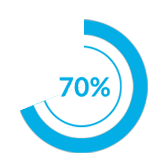
It may be hard to believe, but we’ve still got about 30% of the year ahead of us.

Longest year ever? Maybe. But as we look down the barrel of these last few months, we can see things with clear eyes. It will be challenging. We still don’t have a vaccine. We aren’t gathering in large groups yet. Most offices are still closed. Kids are doing remote learning. The cold months will be hard. So given that we have clarity around our present reality, what will we do with this opportunity?

I really do believe it’s an opportunity.

I remember in January having some big plans and goals for the year. A lot of them had to be adjusted or abandoned altogether when the reality of what this year would look like set in.

But now we know what we’re dealing with. I wrote an article in April about “life after the pandemic” as if it would emerge in early summer. How quaint. Now I, along with the entire population, recognize the gravity of the pandemic and how this is a long haul catastrophe, not a 90-day event.

So in this new reality we're living in, what do you want to look back on and have accomplished in 2020?

We can’t compare pandemic and non-pandemic times. What does it mean to finish strong in the present reality of 2020? There are no surprises at this point (we don’t think!) so given the reality of the situation, how do you want to grow? What can you accomplish? By answering the questions below you can get clarity around what you want to prioritize so that in the future you can look back on these last months of 2020 and say “I lived it well.”

Ask Yourself These Questions to Finish Strong in 2020

  • What can I focus on and achieve in the strangest year in decades?

  • How can I make good habits easy and bad habits harder? 

  • What is worth my time during this last 30% of the year and what is not? What is worth the investment?

  • Looking back on the last eight months, what have I learned about the 80/20 rule in my life and work? Is there anything I can let go of that is taking up more space than it deserves? How can I simplify? 

  • What should I put greater attention and focus on? What will pay off? 

  • What patterns do I see emerging? 

  • What do I need to take into consideration as I make plans for these last months of the year? 

  • What do I want more of?

  • What do I want less of?

  • How can I extend grace to others and to myself?

  • What kind of tone would I like to set in my home and with those who I influence most?

There's 16 weeks left in the year. I read today a man said “any day spent above the ground is a day to be thankful for.” That’s a humbling perspective.

Our time here really is valuable. And there is value in the suffering we are experiencing. So I ask, what will you do with this gift of time?

Big News: The Personal Brand Course is HERE!

Screen Shot 2020-08-02 at 3.01.52 PM.png

2020: Dumpster Fire of Predictability

Does that resonate?

I certainly didn’t know what 2020 had in store, but because I've been slow and steady on the personal branding train for a decade, I didn't skip a beat when one of my clients cut my assignments back by 60% at the beginning of the pandemic.

Wild, right?

The only way that I have been able to attract new clients and opportunities during these out of control times is personal branding.

The good news is you don't have to put in ten years of work to get results like mine. 

Being intentional with your personal brand leads to confidence and a better night’s sleep, because when it comes to personal brand, you can influence it.

You deserve to be in the drivers seat of your career. And I’m gonna show you how to get there.

I’m THRILLED to share that I've taken everything I've seen and learned from building a personal brand over the past ten years and turned it into a four-module, fluff-free online training program for talented professionals like you. It’s called, wait for it…The Personal Brand Course.

Since implementing this personal brand strategy I have increased my annual income by 483%. I’ve been featured in USA Today, The Washington Post, HuffPost, and more. 

Getting clear on your personal brand and learning how to authentically share it with the world means you can get control over your career, finances, and life, all while doing the work that you were born to do.

Are you ready to use personal branding to…

  • Work on your own terms?

  • Recession-proof your career?

  • Take ownership of how others experience you in public (online and IRL)?

  • Get into the rooms, on the stages, and into the positions you want to be in?

  • Be the first person people think of when they need someone with your specialty?

  • Show people how you can be the solution to their problem?

The Personal Brand Course lays out a step-by-step framework to build a powerful personal brand so you can get new clients, new job opportunities, and feel a much-deserved sense of control.

The course includes eight video lessons, the course workbook, as well as these bonuses:

+The Bonus Personal Brand Course Resources and Recommendations One-Sheet that includes my favorite thought leaders, podcasts, books, and tools to help you grow your personal brand. These are the tools and resources I use and swear by in building my own personal brand.

+EXCLUSIVE access to the HSL Courses Facebook Group (be a part of the supportive and action-oriented community of HSL course students and alumni.)

+The Quarterly Goal-setting Workbook that demystifies the goal-setting process so you know exactly what you need to do to achieve your goals. This tool helps you figure out steps to take to get where you want to be one year from now, what you need to stop, start, and continue this year, lessons to learn from last year so you can have your best year yet, and what to do in the next five minutes to help you reach your goals.

Personal brand isn’t just self-promotion and influencer antics. It’s a strategic tool you can use to gain control of your career, finances, and life. Let’s go.

21 Things I’ve Discovered + Enjoyed + Recommend Since the Pandemic Started

Disclosure: Some of the links below are affiliate links, meaning, at no additional cost to you, I will earn a commission if you click through and make a purchase.

It’s been about 8̶4̶ ̶y̶e̶a̶r̶s̶ 21 weeks since the pandemic changed everything about life as we know it.

And while tons of things have gotten canceled or closed, I have noticed that I’ve discovered some new things that I’ve come to really enjoy over these past five months.

Arts, entertainment, nonfiction, audio, bingeable shows, technology, productivity, finances, it’s a whole smattering of stuff. But all of it has made my days a little bit brighter. And in these out of control times, I don’t know about you, but that’s exactly what I’ve needed.

21 Things I’ve Discovered + Enjoyed + Recommend Since the Pandemic Started

HilWing-09324.jpg
  1. Masterclass. This is a collection of 80+ video lessons from world class experts. Think: Thomas Keller on cooking. Christina Aguilera on riffs. David Sedaris on humor writing. I love professional development, books, and conferences, and Masterclass gives you a front row seat to learn about a variety of crafts from those that do them best. (I’ve loved Bob Iger, Chris Voss, Bobbi Brown, and Steve Martin’s classes so far!) 

  2. Grocery pickup. Theoretically I knew this was a thing for a while but #pandemiclife pushed me to finally make this the way I grocery shop. In a past life grocery shopping was a way to get out of the house and do an activity with Eloise, but now that we’re not using it to kill time, might as well get it done easy peasy with pickup. I don’t hate it. (If you haven’t tried Walmart Grocery Pickup, use this link and get $10 off your first order.)

  3. Working at home full-time with my husband also working at home full-time (without additional childcare). This took a little adjusting and finagling but we’ve finally gotten into a routine where we split hangout time with our toddler and split work time. It’s amazing how much work you can pack into 5 or 6 hours instead of 8 if that’s what you HAVE to do. (And I’ve freed myself from the traditional workweek hours because I can’t tell you how much I can get done on a Saturday morning when my inbox is dead!)

  4. Building a Storybrand (book + podcast). Guys, this book on branding and connecting with your customer as the hero of the story has helped me more in my business this year than any other. I can’t recommend both the book and the podcast enough. Clarify your message! 

  5. Becoming. I loved listening to Michelle Obama’s audiobook to hear her incredible story of little girl growing up on the south side of Chicago to First Lady and beyond. What a ride. It’s so well told and inspiring. 

  6. Never Have I Ever. Created by Mindy Kaling, this Netflix show has a hilarious, smart script. It’s perfect high school pandemic escapism.

  7. Hamilton on Disney+. I saw this cast of Hamilton at the Rodgers from the top row of the balcony, so seeing this up close multi-camera version was so satisfying. Highly recommend!! (Cap it off with John Adams on HBO if you never saw the miniseries! [I hadn’t and it’s GREAT. LAURA LINNEY IS QUEEN.]

  8. Refinancing my mortgage. This goes in the adulting category, but if the pandemic gave us anything it’s at least low interest rates. We’re saving hundreds of dollars per month on our mortgage after refinancing. That makes a substantial difference for our monthly budget. 

  9. Everybody switching to video meetings and working remotely. I wrote a whole essay about this one for HuffPost so I don’t know that you need me to expound upon this further, but I’m still celebrating the inclusivity that has occurred as a result of social distancing. It’s also better for the environment to WFH, so there’s that. 

  10. Interviewing all star podcast guests. I have to be honest, I don’t know that I could have snagged time with Dan Pink and Jen Hatmaker if they hadn’t been homebound in the spring. What an incredible opportunity to talk one-on-one with those two and other incredible writers and thinkers. 

  11. WW app. (Mom alert) I started WW in March NOT KNOWING I would want to stress eat for all of April. Luckily, this actually gave me a little corner of the universe to control amidst the chaos and that was really, really nice. I also love the community piece of the app and the never ending recipe ideas. (This link gives you one month free if you want to try it.) 

  12. The Last Dance. We all know I’m not sporty but I’m ENRAPTURED by Michael Jordan’s obsession with excellence and how the Chicago Bulls worked together as a championship NBA team in the 90s. Did you know it takes more than just talent to be the best?? This series is so fascinating and inspiring. And it’s on Netflix now! 

  13. Saving money. I’m still mourning the loss of our Disney trip that was killed, but it was astounding to see that we spent about 30% less per month during lockdown. It made me realize that if we get to a point in the future where we really need to tighten our belts and trim spending dramatically, we certainly can. That’s freeing.

  14. Fairfax County Parks. I’m really grateful to live somewhere that has dozens of gorgeous parks so we can socially distance and enjoy the great outdoors! We just became official members of Meadowlark Botanical Gardens and I’ve so loved strolling with Eloise throughout the beautiful space. Burke Lake Park is also a new favorite.  

  15. My daughter learning to walk and talk. Perhaps the most thrilling happening of 2020 has been Eloise emerging out of infancy and into toddlerhood. She began to confidently walk and quickly run during the spring and now regularly speaks in sentences. “It’s a…” is a favorite sentence. (It’s a plane! It’s a broom! It’s a bow!)

  16. The Peanut Butter Falcon. This is my favorite film we’ve watched this year on our weekly Family Movie Night. (Honorable mentions: Fighting with My Family & Roman Holiday) 

  17. Run. Very fun limited series on HBO with Dohmnall Gleason who is one of my favorite actors! Like a mid-life crisis/comedy/heist/travel movie mostly set on a train. If I can’t travel IRL at least I can watch people take a cross country train ride.

  18. Morning Brew. I only have a few email newsletters that I read religiously. This is one of them! It breaks down the day’s business news in an entertaining, lighthearted way. Here’s a referral link. I think I get a coffee mug or something if you sign up. 

  19. Fairfax County Covid Case Data Dashboard. I know, I know, a bit of a downer, but information is agency. I check this every day to see how the case count is in my county and even my zip code. The news is not always helpful in figuring out what is really happening vs what gets clicks, so this data is welcomed information I get every day. 

  20. TRX To Go. I’m still grieving my canceled gym membership but these straps help! I love the TRX system and this was so easy to install and throw over the door in my home office so I can incorporate strength training into my daily routine.  

  21. Airpods. I know they look bougie but the freedom to not be physically wired to my mobile device in order to enjoy audio provides unexpected joy. Phone calls while cooking. Podcasts while strolling. Masterclass on audio mode while driving. I just can’t. This is my favorite technology purchase in years.  

There ya have it! I hope you’ll take me up on one of these recommendations, and let me know if you do! Now I’d love to know: what have you discovered over these past 21 weeks that you’ve enjoyed?!


Are you ready to get more control of your career, finances, and life? Take the 31-day personal brand challenge. It is a free downloadable PDF that gives you 31 actionable steps to take to improve your personal brand one day at a time in a handy calendar format.

Personal Brand and Googling Yourself, Great Day Washington Interview

I did my first Zoom interview for TV recently and while of course it was fabulous to do so without even having to put on socks, it felt wildly awkward. It’s very distracting seeing your own reflection when you’re trying to give good answers for an interview! 

I’m looking at the camera.
I’m looking at the interviewer.
I’m looking at my reflection.
My hair is in my eye. Should I move it?
Is it more distracting for the audience if I move it or if for all intents and purposes I look like I’ve only got one eye?

It was a gloriously awkward time from my perspective. I was shocked, shocked, shocked all that weirdness doesn’t acutely translate to the final segment. 

Here’s my interview with Ellen Bryan, of WUSA, the CBS affiliate in the DC metro area discussing building a personal brand.

Are you ready to up your personal branding game? Get a smorgasbord of ideas with the free downloadable 31-Day Personal Brand Challenge PDF!

How to Build Your Personal Brand

Photo by Hannah Foster Photography

Photo by Hannah Foster Photography

For me, building a personal brand was undoubtedly the cornerstone of building the career of my dreams. Before I intentionally worked on building a personal brand, people in my community didn’t exactly know what I did. (It’s perfectly fair. I did A LOT of random gigs.) So when I decided I was going to press the gas on a writing, content marketing, and personal development career, I knew I needed to share that information with the world. Because here’s the crazy thing: 

If you don’t tell people how you can help them, they won’t know you can help them.

🤯 

Because of the way I shared my work with the world, I’ve spent every day doing work I LOVE and I haven’t had to worry about making ends meet in a decade. That’s the truth. So today I want to share with you some lessons I’ve learned on personal brand as I’ve hacked away at it for ten years. 

The thing is, for better or worse, today’s workers now have a digital footprint that goes back at least a decade, if not more. We live in a world in which anyone can find out just about anything about anybody else. Case in point: a couple of years ago I was Googling a potential client and I found out he was a state champion video gamer as a pre-teen. There was photographic proof. Our accomplishments, our embarrassments, and our history have a way of following us around online for years. So let’s be intentional about what we want to put out into the world so we can attract the opportunities we really want. 

What is a Personal Brand?

Personal brand is a combination of what content exists out there in the world about you and what people think of when they think of you. Think of some of your favorite celebrities. Let’s go with John Krazinski and Rainn Wilson, for example. Both were actors on “The Office” but you might associate John with being a nice everyman who is relatable, and Rainn with being bold and quirky. That’s a personal brand. What are some of the first words that come to mind when people think of you? Remember, everyone has a personal brand. And if you want to have a say in what yours is, you CAN!

Jim-Halpert-Holds-Up-Picture-of-Dwight-Schrute.gif

Why is having a personal brand so important?

For a lot of people, personal brand is important because it plays a role in your career. 85% of recruiters and HR professionals say an employee’s online reputation influences hiring decisions. So what do you want those Google search results to be if someone searches for your name? 

What are the benefits of building a personal brand? 

  • It’s an opportunity to cultivate a career with intention.

  • It’s an opportunity to take ownership of how others experience you in public (online and IRL).

  • It gives you leverage to get into the rooms, on the stages, and into the positions that you want to be in--not just where you’ve been but where you want to go.

  • It gives others the opportunity to let you be a help to them. Without personal brand, people don’t know what you do, what problems you can help solve, and what needs you can meet.

I created a list of 31 practical ways you can build your personal brand in 31 days. Get it here.

10 Tips to Build Your Personal Brand

So now that we know why a personal brand is important, let’s get clear on the key elements you need to focus on as you develop a personal brand. 

  1. Get clear on your goals. What is the point of all this? What are your long-term career goals? Short-term? What do you want to accomplish? 

  2. Articulate what you do. You’ve got to get clear on what work you want to be known for when establishing your personal brand. If it’s more than one thing, that’s ok! That sets you apart from other people who only do one thing. So, what do you want to be known for? 

  3. Articulate who you serve. Whether it’s clients, customers, or the type of company you'd like to work for, get clear on this so the content that people find online about you really resonates with those people. For example, in my work I love working with people who live at the intersection of creativity and corporate, so I want to make sure the way I present myself online appeals to those creative-types, entrepreneurs, and marketing professionals.

  4. Flesh out what you want to be known for. What do you want to be associated with? How do you want to be experienced? That's really the crux of the whole personal brand. I've had a lot of aspiring freelancers say to me, “Hilary, I want to freelance full time, but I'm really not a self-promoter.” And the truth is, by sharing what you do with the world and who you serve, you're not self-promoting, you’re raising your hand and telling your community, your network, “hey, I’ve got a solution to someone's problem.” If you need a freelance writer, or designer, or consultant, or a speaker for an event, or a fantastic childcare provider, I can be the solution to your problem! So instead of just posting pictures of your cat on Instagram, consider a creative way to showcase how you are a solution to someone’s problem. 

  5. Determine how you will “show your work.” There are a plethora of ways to do this, like a blog, posting videos, starting a podcast, and putting a portfolio online. You have a fantastic opportunity to establish credibility by creating content. If you’re job hunting, produce content that contributes to your field. Maybe it’s a quick how-to video you share via your Instagram story, an article on your blog, or an infographic you create using Canva. Those pieces of content will differentiate you from the crowd. Look, you’re establishing your credibility as a professional already! 

  6. Use your social media presence to show that you are multi-faceted. You may be wondering “So, are you saying I have to delete all my cat photos?” No! Your social profiles don’t need to be all business. Show the best facets of your personality, even if they are not work-related. People want to work with interesting people, so, yes, it’s OK to post that photo of you riding a camel, or a link to a GoFundMe cause you are passionate about. Conveying that you are well-rounded and have interests outside of work is a good thing, as long as those interests are positive and healthy. 

  7. Get familiar with your privacy settings. Do you know offhand if your Instagram account is public or private? Who can see your posts on Facebook right now? Do you know what your social media profiles look like to people you don’t know? Do you know which photos and posts potential employers can find without making a request to connect with you? Is the information about your current employment, skills, education all up to date and accurate? Are there any photos that indicate anything other than professionalism and an emotionally healthy human being that others would want to work with every day? If you think a photo, tweet, or a status update could be viewed as questionable, go ahead and lock it down or delete altogether. 

  8. Contribute to the conversation in your industry. Share thought-provoking articles. Take part in Twitter chats. Join Facebook groups. Connect with people in your field on LinkedIn. And of course, if you get involved with events in your industry in person, post content during and after the event. These are subtle ways to establish your presence in your field. This does not have to become overwhelming. Start with a commitment to spending five minutes a day sharing content and/or interacting with others in your field online. (If you want more actionable tips like these, download the 31-Day Personal Brand Challenge.) 

  9. Provide value to your audience. It’s not enough to just constantly share all the great things you are doing. How are you serving your audience? Are you being generous with your expertise? What are your readers’ or followers’ goals? How can you help them reach them? From custom pocket folders that show off physical media such as images and written works, to digital blogs and showcases, always keep the audience in mind.

  10. Check your online content for narcissism, negativity, and typos. While your closest friends and family may find your selfies endearing (or not, TBH), people who don’t know you as well will likely experience them in a different, more negative way. Speaking of “negative”—even though we live in the age of online rage, unless you pair it with inspiration or a way to take action (think: the difference between a rant and an actionable request) it’s best to avoid these posts. And typos—be ye warned. People intrinsically judge the intellect of the authors of posts that are filled with grammatical crimes. Avoid this trifecta if you want to attract your dream employer.

We’re living in wild and crazy times that feel oh so out of our control. Lucky for us, personal brand is something you can be intentional about and influence to help you have a flourishing career and life

There is a way to convey authenticity online while also being intentional about showing your passion for your work, your expertise and skill, and that “je ne sais quoi” that makes people want to work with you.

Ready to get some practical, nitty gritty action items to kick your personal brand into high gear? Download the 31-Day Personal Brand Challenge! It’s a free downloadable PDF that gives you 31 actionable steps to take to improve your personal brand one day at a time in a handy calendar format.

If the pandemic occurred 10 years ago, here's what would've happened to me.

36884_721953537718_1041694_n.jpg

If the pandemic had occurred in 2010 instead of 2020 my entire world would have come crashing down.

Not only would my dream job have been gone (I spent part of that year performing at a dinner theatre) but my day jobs doing retail, promoting Broadway shows in Times Square, and my internship in a Broadway producer’s office would’ve all disappeared as well.

I would’ve been without opportunities, without options, and incredibly scared--especially when I saw that extra $600 per week of unemployment benefit expiring.

Even way back then, I had this gut feeling that I needed to find flexible work that I could do on a laptop, but I wasn’t sure where to start. I loved the idea of working from home or from anywhere, not depending on the fickle nature of the industries I was in to ensure I’d be able to make rent.

That kind of flexibility and autonomy resonated with me in my BONES, way before I had Eloise and saw firsthand how incredible it is to have a flexible work arrangement when you have a little one who is growing up before your eyes.

The opportunity I’m about to share with you now would’ve changed my life if it had been presented to me then.

My friend and colleague, April Herndon, is hosting a FREE Virtual Conference titled The Work From Home Cure: Learn how to legitimately work from home and make an incredible income without sales, network marketing, scams or data entry

April is CEO and founder of My VA School where she teaches folks all over the world how to successfully work from home through virtual assisting and freelance work. 

After hitting well over six figures doing virtual assisting from home, April is now passionate about showing others how she did it.

I've been asked to be a keynote speaker for this Virtual Conference which means that I have a complimentary ticket for you as part of my community!

I’ll be alongside several other amazing guest experts covering topics like how to find clients, work/life balance, self-care, working from home with kids and the actual logistics of freelance work.

I’m so thrilled to be sharing how building a personal brand helped me pivot to the career of my dreams and how you can employ these same tactics to explode your opportunities too. 

This is not like other conferences. My VA School has strategically put this virtual event together so that you can take the information you’ll learn and apply it RIGHT NOW to get started on your work-from-home journey.

Imagine working from home or working from anywhere, and never having to worry if you're going to get laid off or furloughed again. You have EVERYTHING within you RIGHT NOW to create the life you want. Let us lead the way for you.

We'll teach you how to have full control over your schedule, your income and your life.

Join me HERE and I can’t wait to see you there.

My Experience Learning About Systemic Racism

The first time systemic racism really, REALLY hit home for me was when my friend Tiffany got on Facebook live after Philando Castile was murdered four years ago and wept and talked about how she felt.

For the first time it wasn’t some abstract movement or cause, it was my friend hurting, and being willing to be vulnerable in front of her network via webcam on social media--a friend who I had laughed with, performed in a show with, and had great deep talks with, someone who I really admired and respected.

That was the day that the effects of racism were no longer in history books and musicals, they were in the faces of people I knew and loved. I saw the pain. I saw the fear. I saw how this was not abstract or “far away” to her, at all.

Later, Tiffany and I sat down at a coffeeshop and I told her how her posts on social media moved me, how they made me see things differently, how they spurred me to ask questions and listen.

She told me about her experience walking through the world, how she has spent a lifetime overcompensating to make white strangers feel comfortable. She smiles big. She’s chatty. She makes eye contact. If she’s walking behind someone she makes sure they know she’s there.

Just then a white girl at the next table over said to me, “Hey, I need to run to the bathroom, could you watch my stuff?”

Tiffany looked at me and said, “that never happens to me.”

“Strangers don’t ask you to watch their stuff?”

“No.”

Racism is overt and covert. It’s the assumptions you don’t even notice you’re making. I’m NO expert, but I know this: having conversations with black people, listening to their experiences, and not coming prepped with “another perspective” is a step in the right direction.

So white people, listen to the voices of minorities. Listen to what actual human beings have to say. And if you don't know someone who you can have these conversations with, lol, make a new friend that looks different than you.

And POC, thank you for sharing and please continue to do so. You never know who you are going to wake up with one post, one live video, or one conversation.

HuffPost: Once The Pandemic Is Over, Can We Keep The World This Accessible?

I’m pleased to share that my first personal essay for HuffPost was published on April 30. Here is a portion of it and a link to the entire article.

photo by hannah foster photography

photo by hannah foster photography

Over the past decade, I’ve created a career for myself built on autonomy, flexibility and the power to drop my laptop into my backpack and work from anywhere. (Poolside always felt like a win.) I fancied myself a digital nomad. But everything got slower and simpler and much closer to home once I became a mother 18 months ago. The benefits of working from anywhere gave way to the benefits of working from home — a surprising next-chapter byproduct that I felt equal parts grateful for and challenged by. 

So when it became clear that the best way to slow the spread of COVID-19 was to stay in our homes, only venturing outside to get takeout or groceries, it sounded intense but possible. 

It reminded me of those first few months of having a baby, when my world went from expansive and far-reaching to the diameter of my 1,800-square-foot home. Hibernating with my newborn was a jarring change for me, an extrovert who enjoyed the perks of living close to the nation’s capital. After all, I moved to the D.C. metro area to enjoy meeting clients at coffee shops in Chinatown, regularly checking in on the art at the National Portrait Gallery, and gathering with throngs at the Kennedy Center to see live performances. 

But the reality of having a baby and suddenly being responsible for the life of another human meant that my 40-minute drive to Georgetown might as well have been four hours. Between feedings and nap schedules, I couldn’t leave the house for more than 90 minutes at a time even with baby in tow. And if I did plan ahead and hire help to watch the baby while I attended an event downtown, I was paying $60-$75 just for the travel time to get to the event — not to mention the cost of the time I’d actually be there enjoying it. 

As a first-time mom with many new line items on the budget, there was hardly space for both diapers and babysitting.

So I missed out a lot. I asked for phone calls with clients instead of working lunches. I listened to podcasts instead of attending breakfast lectures. I skipped the annual writing conference. Concerts and plays came and went without me. 

By my daughter’s first birthday, I had begun to head back out into the world more. I traveled several times to speak at conferences. I joined a co-working space, a local gym and a church. I left my home at least every few days. My pace was still incomparably slower compared to pre-baby life, but I was getting out with greater regularity. 

Still, this was only possible with meticulous planning. My husband and I tag-teamed schedules. I asked my parents to come for a long weekend months in advance and scheduled babysitters sometimes six or more weeks ahead of time. Every face-to-face interaction I got to enjoy happened because of layers of foresight, planning and budgeting.

Then social distancing became our new normal. As nonessential businesses shuttered, everyone began working from home (that is, the lucky ones who remained employed in jobs that could be done from home). All of a sudden, nobody was having working lunches. All my colleagues were staring at laptop screens and waving at webcams. The ground had been leveled. 

I began receiving invitations to live-streamed lectures. John Legend gave a concert on Instagram. Birthday cocktails happened over Zoom. Conferences moved online. The kind of events I had previously had to move mountains for were now popping up online. I had a veritable smorgasbord of lectures, workshops and other events to attend from my own home. How was I busier during quarantine than I was pre-quarantine?

6 Steps to Rewrite Your Internal Script Under Stress and Uncertainty

The following article is a guest post written by psychologist Dr. Joy Lere.

nate-neelson-Z5d9GGxTDkA-unsplash.jpg

When we face circumstances that smash plans and expectations, we can quickly become emotionally depleted.  We crave prediction, calculation, and regularity. We favor an inaccurate forecast to no weather report at all.   The COVID-19 pandemic has rapidly turned lives, routines, schedules, plans, relationships, and careers inside out.  

The virus is eliciting a psychological and physical stress response that trips positive for most, regardless of whether they are infected, ill, or running a fever.  The term “stress” typically does not instinctually free associate to something positive for most, yet it is in the crucible of some kinds of stress and strain that strength and growth can be forged.   

Your life has been disrupted.  Perhaps you are facing possible job loss and are experiencing a spike in financial anxiety.  Maybe you are trying to adapt to a new role as a homeschool teacher but are feeling in over your head.  You and your spouse are potentially struggling to sync schedules and share space as you attempt to work from home.  The story you tell yourself about your current circumstances will impact your mood, and in turn, drive your behavior.  Rewriting your internal script can serve to reduce stress and create psychological breathing room when you are feeling mentally claustrophobic.  Here are six steps to rewrite your script when the show you are starring in has suddenly changed.

6 Steps to Rewrite Your Internal Script Under Stress and Uncertainty

1.  Reframe.  While there are many things that may exist far outside your scope of control, one of the most powerful is fully within your grasp: your internal monologue.  In certain scenes in the act you are living, it may serve you to edit your lines. Be careful not to play on repeat extremes of “always” or “never” in your head. Be on guard against labeling people or circumstances negative with no redeeming quality. Consider the potential power of creative improvisation. We are all, to varied degrees, making the rules up as we go as we wade into uncharted waters. Experiment with something new, see if it works. If not, you received feedback; don’t confuse this with failure. Adjust as needed. Cast limitations as safeguards. Let restrictions be seen as new opportunities to restructure. You can’t go to the gym right now, but you now hold a free membership and all-access pass to a studio where you can develop resilience and adaptability. These characteristics will set you apart long after this chapter is over.

2.  Inventory. Take stock of the resources currently available to you.  While inventories often involve lists, they actually start with powerful questions.  Consider:

  • What do you have?  

    • How can you use it?  

    • How can you give it?  

    • What do you need?  

  • What do you need?  

    • Where can you find it?  

  • Who holds it?

3.  Focus on your haves.  Develop a regular gratitude practice by journaling or saying aloud three things you are grateful for at the start of your day and close of your night. These are powerful psychological anchors when it seems as though the walls are closing in around you. When you consider your list of “have nots” respond with a plan to secure them, not self-pity.  

4.  Structure.  As humans we crave rhythm, routine, predictability, and roadmaps. This is part of why this portion of lived history is proving to unravel and undo so many people in so many ways. We must accept that we cannot forecast, but we can —and must— continue to exist within the current fences of our lives. This is not vacation. This is not spring break. Develop a rhythm. Write out a schedule in advance. You’ve actually been given a new opportunity to figure out what the optimal one for you and your body is (hint: it’s maybe not 9-5).  Practice flexible regularity. Rhythm with give and grace.  

5.  Act.  Exercising agency will prevent psychological atrophy and emotional demise. In a world where much is out of your control, many things are not. Identify them, focus on them, do them.  Find practical ways to prevent, protect, learn, and serve.

6.  Speak.  You are more likely to spin in your head if you exist in a psychological silo. Sort through your feelings, fears, and options aloud with trusted friends, family, and/or a therapist. Ensure that the people you are entrusting your inner world to are not a triggering stimulus for becoming increasingly emotionally flooded. If you are flailing in the deep end, make sure you are reaching out to someone who is clearly and securely on the side of the pool – not drowning next to you.

Broken expectations can leave sharp shards that, unless handled carefully, can result in blood loss and pain.  Be diligent in how you are holding yours. Give the physical protective gear to the hospitals right now, but attend to your psyche with proper precautions.  Use kit gloves when necessary. Now is the time to be compassionate and flexible, but it is not the time to lower the bar. More than ever, it is time to rise to the occasion.  Pause (but don’t stop). Breathe. Invest. Create. Look. Discover. Contribute. Connect. Hope. Survive. Thrive.  

Dr. Joy Lere is a psychologist, consultant, speaker, and writer who practices at the intersection of behavior and business, specializing in work on the merger of money and mindset. Dr. Lere has previously served as an Associate Clinical Professor of Clinical Psychology at George Washington University and has held clinical and research positions at Children's National Medical Center, Penn Medicine Princeton Health, and the Department of Defense. Connect with Dr. Lere here

6 Tips for Getting Work Done with Kids at Home

HILBRAND-07318.jpg

New (temporary) normal: work from home with kids at home.

How can you be productive while parenting? How can you actually do your job when you have to simultaneously supervise children? 

As a work from home mother of a toddler who sometimes has childcare help and sometimes doesn’t, I have some ideas for you. Consider this your work from home parent pep talk. Here are six practical tips you can use right now to get things done while supervising kids at home. You can do this!

6 Tips for Getting Work Done with Kids at Home

1. Release the Monday through Friday 9-5 expectation and look for hidden pockets of time. During this strange season, it will be difficult if not impossible to get uninterrupted 40 hours of work in during traditional work hours. So go ahead and release yourself from that expectation. Maybe you have the kind of position where the number of hours you put in doesn’t even matter as long as you’re getting your work done. But if you do have a job where hours are counted, remember, there are plenty of other hours in the week that are perfectly acceptable to work on projects, especially if you can do so independently. 

As a work from home mom of a toddler, a world of possibility opened up to me when I realized I didn’t actually just have the window of 8 AM-6 PM Monday-Friday to complete my work. All hours of the week, Monday-Sunday were fair game to me. I don’t “deserve” to only work during traditional work hours. If I need to work at off times, then that’s what I’ll do. There are hidden pockets of time where you can get important projects done. For example, if I worked during my daughter’s nap and for three hours each evening and did not work at any point during the rest of the week I would clock at least 35 hours. It’s time to rethink our schedules if needed. Where are the hidden pockets of time in your schedule?

2. Get crystal clear on what matters most and plug it into your schedule. At the beginning of the week (or at the end of the prior week if you’re a Laura Vanderkam disciple like me) jot down what needs to be accomplished this week in order for you to win. Then estimate how long each project will take and block it out on your calendar. I can’t tell you how much more productive and efficient I have become since doing this as opposed to just having a long “To Do List” and working my way through it with no scheduling strategy in place.

I typically have somewhere between five and ten Big Rocks on my list for each week. These are the first items that get put on my schedule. Other less important items get scheduled around them. So even if I find myself short on time on a given day, if I knock one of those items off my list, I’ve won. This practice not only helps me accomplish what matters most, it is also an excellent exercise in determining what is most important. Often in work we don’t even take the time to decipher what matters most.

3. If you are an employee, be communicative with your supervisor about the reality of the situation at home. Standing meetings with more than three or four people may not be able to be moved, but calls that pop up with just a handful of people should be able to be scheduled at a time that works for everyone in attendance. Ask to adjust planned calls and meetings in advance so it coincides with planned quiet hours for your children. And don’t be afraid to liberally use that mute button on your phone. No need for everyone to hear everyone else’s background noise for the duration of the call. 

We are all in this boat together so your supervisor will likely understand your request for flexibility. And he or she will likely understand a little noise in the background as well. Remember to have grace with yourself and your family in the same way you would give grace to someone else. 

4. Employ the 80/20 Rule and the Minimum Effective Dose. You may not be able to do everything you were doing prior to working from home with kids. But that may be ok! Take a look at what has been on your plate with fresh eyes. What can be eliminated? What truly did not move the needle? What was wasteful? According to the 80/20 Rule, 20% of efforts yield 80% of results. What is the 20% of your work that matters most? 

Getting clarity on the Minimum Effective Dose is crucial too. Water boils at 212 degrees. There is no need to heat it to 213 degrees. What is the equivalent in your work to 213 degrees? What has been eating up your time and energy that has really not helped you or your team reach its goals? 

5. Ask for help. If you have a partner, both of you are impacted by working from home and having kids at home. While often childcare duties fall a little more on to one parent than the other, it’s important that everyone pitch in to help. And it’s even more important to ask for the help that you need. Don’t expect your partner to be a mind reader. Try to anticipate what your needs will be. I recognize that my patience and energy wane with my toddler after three hours of uninterrupted time together. That is a good time for me to tap out, if even for a little while. 

And take a look at your schedules together. Determine how you can split duties during traditional work hours and make up time missed during evenings, early mornings, and weekends. In my family our daughter needs attentive care for about 27 hours of the traditional work week, so we have determined how to split those hours up between the two of us and complete our work during non-traditional hours. Strategize, slice and dice those schedules, and collaborate. 

6. Remember: it’s a season. Keep things in perspective. This is a weird time where everyone has to make sacrifices--a really strange phenomenon in our individualistic culture. But making sacrifices for the wellbeing of others is refining and sharpens character in a way that you know well because you are a parent. 

This is a season of sacrifice and it is a season that will end. So don’t be dismayed. Take it one day at a time. Don’t let your mind race to the long view and get anxious about how many days this will last. Just focus on today. Remember this is temporary. Take stock of what is good around you. And choose to do what you can to make today great. 

My Top 10 Books of the 2010s

HILBRAND-07048.jpg

I’m still not quite done looking back on the last decade…

…(after all, who among us noticed the decade was coming to a close until approximately December 27?) So today I want to share the books that made the biggest impact on me from 2010-2019.

These aren’t necessarily books that were published between 2010-2019, but they were books that I read during the period from my mid-twenties to my mid-thirties (a pretty pivotal period of life.)

All the books that meant the most to me settle into two categories: “Creativity and Work” and “Personal Development.” I picked five for each. And yep, they’re all nonfiction. (I know, I know…) Goal for the next decade: diversify.

My Top 10 Books of the 2010s

Creativity and Work

The Artist’s Way by Julia Cameron
I loved the 12-week study on rediscovering creativity. This should be standard fare for anyone in a creative field or who enjoys creative hobbies. I read this in a reading group with several other people. I highly recommend doing it that way. 

Creativity, Inc. by Ed Catmull 
This is a fascinating look into the brilliance of how Pixar Animation is run. I stole the “personal board of directors” concept from this book and still use it today.

4-Hour Work Week by Tim Ferris 
This book has made the biggest impact on how I approach my career of any book I’ve read. Batching tasks, outsourcing, and minimum effective dose are all concepts that I learned in this book that I use every single week. 

Big Magic by Elizabeth Gilbert 
This book taught me not to take talent, success, recognition, and creativity so seriously. If you love something, do it for the joy of it. Don’t put expectations on it. I loved this book so much I even wrote a blog post about it and made a pretty printable discussion question guide.

The Creative Habit by Twyla Tharp
The connections Tharp draws between routine and creativity transformed my perspective on what it means to be creative. Don’t expect inspiration to simply strike. Habits and discipline lead to creativity.  

Personal Development

Atomic Habits by James Clear
This book transformed my perspective on goals and habits. Tiny changes can have a mammoth impact. This is a book I will re-read. 

Essentialism by Greg McKeown 
This is one of the most challenging books I’ve ever read because I tend to be a person who likes a smorgasbord of options. But this book encourages its reader to ruthlessly pare down so you can accomplish what’s truly most important.

Digital Minimalism by Cal Newport 
I read this one along with its predecessor, Deep Work, just last year. Newport gives some incredible food for thought on what’s wrong with our culture’s passive relationship with technology. 

The Wisdom of the Enneagram by Riso & Hudson
This deep resource on the Enneagram had a profound impact on me. I wrote about what I learned about the Enneagram, anxiety, and gratitude here

168 Hours by Laura Vanderkam 
“You have more time than you think.” This book re-shaped my way of looking at my calendar, scheduling, and time. If it weren’t for this book I wouldn’t be able to do what I do and be as present for Eloise as I am. (Thank you Laura.) 

These are the ten books I read in the last decade that impacted my approach to career and life the most. I also read a lot of memoirs and these two were my favorites: Booked: Literature in the Soul of Me by Dr. Karen Swallow Prior and Born Standing Up by Steve Martin. 

What books did you read in the last decade that were transformative? I’d love to hear. 

Hobby vs Side Hustle: How to Know If You Should Go Pro

vladimir-proskurovskiy-ZlPeHjYoAdU-unsplash.jpg

Ever since the Great Recession hit over a decade ago, the pressure to turn hobbies into side hustles has intensified.

Between the sharing economy, the gig economy, and the ever expanding freelance landscape, it seems any hobby you do for fun, well, you could and should monetize.

So, is it time your hobby should turn a profit? There are considerations to make before you turn your hobby into your side hustle. In some cases it can be a fulfilling way to earn a supplemental income. But in some cases the experience could lead to burn out and loss of interest in your passion, not to mention the slew of proven benefits that come with embracing a hobby and leisure.

To get clarity on whether you should monetize your passion project or embrace it as a leisure activity, answer these five questions.

Hobby vs Side Hustle: How to Know If You Should Go Pro

  1. Would you resent it if your side hustle didn’t meet your financial needs?

    If yes, HOBBY.

    Imagine turning your hobby into your work and depending on your gigs, customers, and clients to help you keep the lights on and put food on the table. Now imagine if it got hard. What if you weren’t earning what you need to earn so you had to turn to another part-time job? Would you resent your passion? Would you be frustrated that you couldn’t achieve a certain standard of living? If you have a hunch that the answer would be “yes,” then perhaps you should let your passion be your hobby and earn a paycheck doing something else.

  2. Are you ready to make sacrifices to go pro?

    If yes, SIDE HUSTLE.

    Are you game for spending extra time on work to meet financial needs? You will probably need to say “yes” to clients and projects that aren’t your dream projects. When your hobby becomes your hustle you may have to take on projects that you don’t love. You may have to commit to inflexible deadlines and deliverables. If you don’t mind ramping up your discipline around your hobby and losing some control over deadlines and deliverables, then turning your hobby into a side hustle may work well for you. 

  3. Does your interest serve as a great escape and outlet for you?

    If yes, HOBBY.

    Picture yourself in your favorite vacation destination. Then picture yourself picking up and moving to that destination. Maybe it feels great at first, but then you quickly realize you no longer have a favorite vacation destination to get away from it all from time to time. Same principle. If your hobby serves as an amazing stress-reliever and escape for you, you may consider holding that sacred space and letting it be just that. 

  4. Is there a gap in the market where your product or skill fills a need?

    If yes, SIDE HUSTLE.

    This involves some real self-awareness, market research, and gut-level honesty. Is your work or product highly available? Does the market demand show you that you would get consistent work? If your skill is not in high demand, you will likely enjoy using it more as a hobby than as a way to earn a living.

  5. Does the idea of getting the approval and input of a manager or client take the wind out of your sails?

    If yes, HOBBY.

    If you like to work on your own timeline, tinker ‘til you’re happy with a product, and decide for yourself if something is “good” or “finished” then turning your hobby into a hustle will probably squelch your joy. 

If limitations and financial pressure don’t make you come alive, then monetizing your passion is probably not a good idea. If you treasure the lack of stress associated with your hobby, then consider that monetizing it will not bring you joy. But if there is a need for your work in the marketplace, if you get energized by doing the work no matter the limitations placed on it, then your hobby may be more than just a hobby--it could be a very successful and meaningful side hustle in the making.

Getting Your Internet Ready For A Side Hustle

Once you start taking orders, answering customers and uploading photos of your work, a slow home connection turns into a real bottleneck. DSL runs over existing phone lines, so it tends to be available in areas where cable or fiber never reached, which matters if you're working from a rural spot or an older building. If that's your situation, comparing DSL internet providers by your address will show which plans actually reach your street and what speeds you can expect. Speeds usually land somewhere between 5 and 100 Mbps, which is plenty for email, invoicing and running a small storefront, though heavy video uploads may push you toward faster options. Check the upload speed specifically, since that's the number that decides how long it takes to post product shots or send a client a big file.

Here are My Technology Boundaries for 2020

In a recent blog post I introduced the idea of creating a personal Technology Manifesto for 2020.

Backstory: I want to decide in advance how I’m going to utilize digital media and technology. I know I struggle with picking up my phone too much, scrolling through social media in excess, and generally letting technology be a distraction from the real world around me. So in an effort to continue to make my relationship with technology healthier, I have drafted my 2020 Technology Manifesto. 

Today I’m sharing how I filled out the Technology Manifesto Worksheet and what I am committing to for 2020. 

My Relationship with Technology in 2020

  • My use of my phone will be strategic, measured, and thoughtful. I mentioned in this post that my word for the year is “strategic.” I want to maximize the tool that is my smartphone for helping me be productive, invest in relationships, and help others. But I don’t want to veer into territory that is not strategic. I don’t want to have addictive behavior. I want to be mindful of how and when and why I use my devices.

  • I am going to take a break from social media for the month of July. I did this last year and it was the happiest month of 2019 for me. I love the experience of powering down in the summer and focusing more on my analog, IRL experiences. I think it is a great summer ritual that I want to continue.

  • I will spend time without my phone entirely on a daily basis. I will plug it in, in my bedroom after putting Eloise to bed. Having it within arms length 24 hours per day is not healthy for me. This is by far the most challenging commitment in my manifesto. But I know that after 7 PM use of my phone has low ROI. This is a healthy practice that will likely be difficult for a while in the beginning but hopefully soon it will become another nice healthy habit. No phone pickups after 7!! (This should really help with the next item on my manifesto.) 

  • An action I will take to increase my enjoyment of technology is to make a game out of lowering my average number of weekly pickups. Right now it is at an average of 7 pickups per waking hour. WHAT THE… That number is shockingly insane to me. (If you have an iPhone you can check your number of pickups by going to Settings>Screen Time>See All Activity.) I want to lower this over the course of 2020 to an average of 1.25 pickups per hour for a total of only 20 pickups her day. This seems like a realistic amount. There’s never more than 20 time sensitive reasons to pick up my phone in a day. Usually it’s under five... 

So there ya have it. I fleshed out my purpose and rationale for my approach to my handheld devices this year. And then I made commitments to not having free rein with my technology. Measured. Thoughtful. Strategic. That’s what I want. I want to know where my time is going. Where my energy is going. Where my focus is going. I want my daughter to rarely see me on my phone (not the other way around.) And this public commitment to healthier technology habits is a great step in reaching out for accountability to reach that goal. 

So tell me. What do you want to do differently in your relationship with technology this year? Do you want to check your email less? Be more intentional about the hours you spend on YouTube? What about your Instagram habit? I would love to know what you are going to do to increase your happiness with technology in 2020. 

My 2020 Word of the Year (and my words for 2017-2019)

Untitled design (22).png

For the past several years I have chosen a word for the year. Choosing a word has been a great exercise in helping me get clear on my vision for the year ahead.

Coincidentally, the past four years have all started with the letter “S.” While the alliteration has been coincidental, the intent of the words have not. And it’s been fascinating to look back at each of these words and see how one links to the next and to the next. Reviewing each of these words takes me right back to where I was when I made the decision to commit to that word for the year. So, today I’m sharing my words for each of the past three years and my word for 2020

My word in 2017 was SURRENDER. That was the year that my husband and I knew we were ready to move to a new city but we didn’t know which city it would be, we didn’t know what jobs we would have, and we definitely didn’t know when it would happen. I had to make peace with not having control. (In an effort to take control when I had no control I chopped 13 inches off of my hair!) So I chose the word “surrender” and attempted to hold the year ahead with a loose grasp. We did end up moving that year. In May we relocated to Northern Virginia, right outside of DC. That was definitely a year full of change where I really had to go with the flow. New city. New jobs. New grocery store to learn. It was a shocking change after I had grown comfortable with our life together in Lynchburg where we had spent the previous five years. Even though I’m a person who craves and thrives on change, the lack of predictability that year was challenging. Surrender was the word because it’s what I needed to do. Side note: I can’t believe we are coming up on our third anniversary here in the DC area. Crazy. 

My word for 2018 was STEWARD. That was the year I was hoping to get pregnant but I didn’t know what was in store. I wanted to make lots of plans but with something like a potential pregnancy you just don’t know what to plan for! So, I had to move forward in my work and other goals as if that wouldn’t necessarily happen for me right away. I knew I wanted to steward well whatever God had for me that year whether it was a pregnancy, a show contract, speaking opportunities, etc. Well the message came loud and clear, by the end of the month of January we were expecting. That was the year I turned down an offer to do a show in the area, focused on the pregnancy, and oh yeah, started a little podcast called Hustle & Grace. I was sick and tired a lot that year but we had a healthy baby girl in October. What an honor to steward that little life. 

In 2019 my word for the year was SAVOR, which my friend Beth McCord, the Enneagram Coach, says is the word that Enneagram 7’s should focus on as we are always thinking two steps ahead and looking forward. “Savor” is a great word to focus on to center yourself in the present. I knew I’d be saying “no” to some opportunities and there would be a lot of stillness and simplicity in my life whereas I’m used to lots of busyness and excitement. So I found myself chewing on what it meant to “savor” quite a lot. I wanted to focus on savoring last year because I really wanted to be fully present in Eloise’s first year of life. I knew I was only going to have a baby for a little while. And now that Eloise has launched into toddler years I’m stunned by how true that statement was. Babies don’t keep, yall! I’m so glad that I focused hard on savoring each moment in 2019. It was the sweetest, sweetest year.

I had some mixed feelings about my word for 2020. When it initially came to me I thought “well that is not a sparkly, magical, warm and fuzzy word.” But the more I thought about it, the more I realized it was perfectly perfect for me right now. And that word is STRATEGIC

Why strategic? I have a history of not always making decisions in a very strategic way. If a door opened to me that sounded fun or challenging or scary or exciting I’d probably just walk through it. If it felt “new” or “out of the ordinary” it felt like reason enough. But my priorities have shifted. I’ve become keenly aware of my “closet of time” (like I mentioned in a recent Hustle & Grace episode) and I have to be strategic about making choices that have the biggest payoff. For example, there was a time that I might take every speaking gig that came my way simply because traveling to new cities around the country was fun. But now, that’s not enough of a payoff for me. I need to be strategic in my “YESes” and in my “NOs.” I need to know what my why is behind every decision I make, particularly any decision that affects my family. Time is precious. Memories with family are precious. Resources are finite. I want to make sure every work decision, financial decision, time decision, and technology decision I make is STRATEGIC.

So there ya go. That’s my word for 2020. And it’s already affecting my decision-making. 
Now I want to hear what YOUR word for 2020 is! Leave a comment here or HMU on Instagram or Twitter

My 2020 Technology Manifesto

Toward the end of last year when I was reviewing 2019 and thinking about 2020, I reviewed my relationship with technology. One thing I noticed?

July, the month that I was off of social media, was the happiest month I remember having all year.

Maybe it’s because more good stuff happened that month or maybe it was because I was really mindful and present in my own life without the distraction of social media.

Whatever the case, I know I want to take a break from social media again this July. I think it’s going to be an annual thing for me, part of a summer vacation ritual.

In addition to my social media break, I also read the books Deep Work and Digital Minimalism. Both books advocate for a minimal, measured, disciplined approach to technology. (In fact, their author Cal Newport has never even had a social media account.)

The truth is, I’m a part of a generation that has grown up passively accepting new technology as it was handed to us. But I want to use my agency to decide how and when to use technology, as opposed to just becoming a passive addict of whatever pops up next. I want to strategically use it as a tool to connect with others on my terms. I don’t want it to be something that I use to numb out and combat boredom.

So, I created the 2020 Technology Manifesto originally for myself, because I felt the need to critically think about how I want to go about technology in 2020, but then I realized it could be helpful for others so I put together this printable worksheet.

With some challenging questions to answer, the 2020 Technology Manifesto is a one-pager that helps you flesh out your own thoughtful and measured approach to technology this year. If your use of your smartphone, streaming video, or social media ever bums you out or feels like a huge distraction or time suck, I encourage you to grab your copy of the 2020 Technology Manifesto. Fill it out to reflect your own values and commit to a better, healthier relationship with technology in 2020. 

I’ll be sharing mine, right here on the blog next week. And I’d love to see yours too! Take a picture of it, post it on Instagram with the hashtag #technologymaninfesto, tag me, and you’ll be entered to win a copy of Digital Minimalism.

5 Steps to Set and Achieve Your Career Goals

3O3A1360 copy.jpg

January provides a natural fresh start to reexamine career goals and adjust your strategy to make your dreams a reality. Sure, you can use the calendar change to resolve to lose weight or kick a bad habit, but you can also use it to put some renewed energy into your work. So where should you begin?

Setting and Achieving Your Career Goals

  1. Start with your imagination. Close your eyes. It is New Years Day, next year. You are looking back on the year you just completed–on all that you’re proud of and happy to have experienced and accomplished. What happened over the year to make you feel that way? What are those career highlights? Jot them down.

  2. Reflect on your current reality. Think through what you want and what you are dissatisfied with in your current state. What are your pain points in your career? Frustrations in your current job? Hopes?

  3. Get clear on your 10-year career goals and then work backward. Do you know where you want to be a decade from now? While your aspirations will likely change, it’s important to determine where you want to go so you can have a clear direction in your goals today. You always have the freedom to change direction, but you need to get clear on a long-term goal you want to aim for today.

  4. Flesh out the practical steps you can take to move the needle in the next 90 days. After you have fleshed out what you want your career to look like in ten years, determine what needs to happen within the next five years to get you there. What about three years? Two? What needs to happen this year to help you in the direction of your career goals? Now, what steps do you need to take this quarter to help you reach those one-year goals? This is what you need to focus on now.

  5. Keep those 90-day goals in front of you on your desk. As you plan your tasks for the week, your calendar, and your to do list, make sure you are taking steps this week that will move the ball down the field toward your 90-day goals.

The truth is, you can do something in the next five minutes that will advance your career, whether it is reaching out to an old colleague, reading an article on industry predictions, or logging on to LinkedIn to do a quick review of your profile. There’s no reason that this can’t be the year you make great leaps in your career. It starts with clarity in identifying what you want and the clear steps you need to take to get there.

For help crystallizing your 2020 goals, download the free New Year’s Goal Setting Workbook.

A version of this article originally appeared on McKinleyMarketingPartners.com.

My Year In Review: 2019 By the Numbers (1st Year as a Working Mom!)

IMG_2383.jpg

This was one of those years that felt like two or three or maybe four.

Every year around this time I do some reflecting and reviewing on the year that’s coming to a close. I ask myself questions like: what were the highlights? Am I happy with how I spent my time? What worked well? What do I want to change? How much did I earn (as a hybrid W2-Freelancer each year is a little different.)

When I was gathering my articles to review what I had written and watched throughout 2019, I was in disbelief to find that I saw The Music Man this year. It had to have been last year. It HAD to have been almost two years ago. Nope. Just goes to show what a full, full year it has been.

Motherhood! Working mom life! Work from home mom life! Phew. Curveballs and lessons galore.

For context: I returned to work from maternity leave on January 3. When you start the year completely sleep deprived and heading back to work with a baby that’s not sleeping and shows no signs of any kind of predictability, it makes the days and months feel long. For me, the fog lifted in a major way when Eloise began to sleep through the night in May. And from that moment on time moved forward like a high speed train. I couldn’t keep up! Life feels so very, very different than it did during those early infant days. My brain can hardly come to terms with the fact that this all happened in the same year.

So, as skeptical as I am that this all occurred in the past twelve months, I ‘d still like to present my 2019 by the numbers and some of my favorite things I’ve gotten to create and be a part of in this grand and bewildering year that closed out the decade.

Best of 2019: 

  1. Mark Twain Prize for American Humor Honors Dave Chappelle. This was a wild experience. I got to interview folks on the red carpet before the big event. You’ll be able to watch the whole thing when it airs on PBS in January.

  2. Review: Mike Birbiglia’s The New One. This just so happens to have been the first live theatre date night JC and I got to go on since Eloise was born. And the whole show is about the experience of becoming a parent for the first time. It was hilarious. And it’s now on Netflix. So go watch it ASAP.

  3. Captain Marvel, Disney+, and Star Wars: 8 Content Marketing Lessons from Walt Disney Studios. This is the year I became a marketing conference speaker! I loved sharing what marketers can learn from Walt Disney Studios with audiences in D.C., Boston, and Raleigh. I hope to take this show on the road again next year and visit some other great cities. If you’d like me to speak at your thing, HMU!

  4. Podcast Interview with American Idol’s Jeremiah Lloyd Harmon. My most popular Hustle & Grace episode of the year was with my sweet-as-can-be friend Jeremiah. His talent is jaw-dropping and the world took notice when he was on American Idol this year. We had a fantastic conversation and I am still chewing on his insightful perspective on minimalism.

  5. 5 Ways Hiring Managers Can Get Positions Filled Fast (Washington Post Careers Blog). A personal highlight of the year (especially as someone who lives in the DC metro area) was getting an article published on the Washington Post’s Careers Blog!

How I Spent My Time in 2019

I got to take in 11 live shows in 2019 from Kristin Chenoweth in Concert to Jagged Little Pill on Broadway. I loved (most of) what I saw. Here is the vault of all of my reviews for DC Metro Theater Arts in one handy spot.

I also got to attend the Arts Summit at the Kennedy Center and get an early tour of the new buildings at the Kennedy Center called The Reach. Have I mentioned that the Kennedy Center is my favorite place in Washington, D.C.?

I spoke at three conferences this fall and moderated a panel at another. Speaking took me from Boston to Raleigh this year and I had a blast. With each new engagement I grew in confidence and really felt I got to improve my speech. I love, love, loved this—and it wasn’t something I planned or a goal I set for this year. Life lesson alert! Sometimes when doors open you just walk through them. Can’t plan for every awesome thing (as much as my Enneagram 7 heart wants to have all the things to look forward to.) Huge highlight of the year.

I ran a 5K in March and attended the weddings of three friends this year. The 5K was brutal for several reasons (basically having to do with that I hadn’t fully recovered from having a baby when it was time to train for the race). The weddings were fabulous.

JC and I celebrated our first Mothers Day and Fathers Day with Eloise. It is an utter delight being her parents.

We hosted out of town guests several times this year and loved taking Eloise to ten different states to meet people who already loved her. She is quite the traveling baby.

I saw only six movies in the theater this year. Big change from last year. In 2018 I wrote down that I had seen 17 movies by July (RIP MOVIEPASS!!) and then I stopped counting, but I’d venture to say I probably saw 20 or more. ‘They’ were right about the whole “you don’t go to the movies as much when you have kids” thing. I LOVE to go to the movies and treasure every time I get to go.

One of the bigger highlights of 2019 was that we finally settled on a local church and have gotten involved. Our family attends a community group twice a month with other families who have little kids and I volunteer with the music and worship ministry. I sing vocals on a regular basis and also really enjoy live hosting on stage.

And here is my year by the numbers:

40 articles

26 podcast episodes

15 trips 

15 new words (Eloise’s ;-))

12 months of nursing

10 new teeth (Eloise’s ;-))

5 reviews 

5 months of sleep deprivation

3 speeches

1 surreal trip to the south lawn of the White House

1 wasp sting

That about sums up my year. I absolutely LOVE reflecting on the past and looking toward the future. I freakin live for this week between Christmas and New Years to do JUST THAT.

What a brief moment in time NOW is. Let’s soak it up and live in gratitude for what we have, right here, right now. (*I think it’s ok to not be grateful for the wasp sting though.)

Disney Plus has launched. Here are four lessons for content marketers.

Screen Shot 2019-11-12 at 9.21.50 AM.png

I have spent much of this fall speaking at marketing conferences on what content marketers can learn from Walt Disney Studios’ recent business decisions: from live action remakes to acquiring Lucas Films (Star Wars) to launching Disney Plus.

I want to share just a couple of the ideas I’m discussing at the Digital Summit Series. By the way, you can catch me sharing the full presentation this week at the Internet Summit in Raleigh, North Carolina. I would love to see you there!

This is a big week for Disney fans. Disney+, the Walt Disney Company’s much anticipated streaming service has arrived in North America. It’s a big deal for a company that has made billions in the traditional film and television industries. Bob Iger, Disney CEO calls it “hastening the disruption of our own business,” according to Iger’s new memoir, The Ride of a Lifetime

But Disney has been making smart and strategic moves as they enter the streaming services fray. And since no company quite encapsulates the gold star of storytelling-meets-business quite like Disney, there are multiple lessons marketers can learn from the mouse. Here are five content marketing lessons from the launch of Disney+.

  1. When new technology disrupts, get in the game and do it better. Streaming services like Netflix have monumentally shifted how people take in film and television. It’s had a huge impact: from shuttering all but one Blockbuster video store to a decline in movie theater ticket sales. Instead of dwelling on the creativity of the past, Disney is innovating to stay relevant. Disney has strategically acquired Marvel, Lucas (Star Wars), National Geographic, Pixar, and 21st Century Fox and thus is able to compete with heavy hitters like Netflix and Amazon. Their secret weapon is characters that people feel strong emotional connections to, and they’re using that to their advantage.

  2. Repurpose content to connect with your audience. Repurposing content is critical to a savvy content marketing strategy. And with the launch of Disney+, Disney is doing exactly that. From Disney Channel original shows to animated classics that have been in the vault, Disney is aggregating all of their content and putting it in a new format to reach a larger audience. Some people who resonate with your content won’t read a white paper. But they will listen to a podcast. They might download an infographic. Repurpose strong content to reach your audience in new ways. Repurpose to stay relevant.

  3. Expand on content that resonates. Disney isn’t just bringing old stuff out of the archives. Yes, you can watch Darkwing Duck to your heart’s delight, but it’s also creating new content with characters that you already know and love. The first of its big budget franchise expansion shows is The Mandalorian, a Star Wars live-action television show directed by Jon Favreau. Disney dropped a cool $100 million on the series. Disney has plans for at least four Marvel television shows as well--all with the original film stars. Disney is bringing new stories and new shows to beloved characters and franchises that people love. Content marketers should too. Dive into your analytics. Which pieces of content performed very well? How can you take a deeper dive? At McKinley Marketing Partners I wrote one article on ageism and saw that it got 4x the number of clicks than other articles published in that month. So we took a deep dive and wrote a four-part investigative series. Pay attention to what resonates with your audience and serve them by expanding on it. 

  4. Make the first “yes” easy. Disney is starting at a very low price point: $6.99 per month--$6 cheaper than Netflix’s standard package. Users can download content to ten devices with 7 different accounts. This is an easy entry point. So how can you make the first “yes” easy with your content? Create an experience for your audience that makes them think, “Well of course I’ll trade my email address for this download. That’s a no brainer.” 

Creativity and a commitment to excellence are what set Disney apart from its competitors decades ago. But it’s Disney’s innovation and commitment to embracing technology that continue to make them the top story-based business in the world. This applies to your content marketing program as well. Look at your analytics with fresh eyes. What story is it telling you? What should you repurpose or expand? What technology do you need to pay attention to in your vertical? What do you need to do differently to approach your content the Disney way? 


Thoughts On Motherhood and Baby's First Birthday

IMG_5785.JPG


This week we are celebrating Eloise’s first birthday and our first anniversary of becoming parents, so I wanted to share some thoughts from the motherhood perspective. Milestones are mile markers for reflection. I love these special days when we can take time to reflect and look forward with the unusual feeling of a change brewing. This weekend brought the first bit of chill in the air here in Northern Virginia and the timing couldn’t have been more appropriate. A season is changing. We’re beginning Eloise’s second year of life.

This first year was full of paradoxes. Becoming a mom is the craziest, most drastic change. And yet, the way I care for Eloise feels so natural, I never even noticed the change creep up on me. This kind of care for another and fierce protectiveness is like nothing I’ve ever felt. I’m a youngest sibling, you see. I don’t have much of a “protective” “sacrificial” gene. And yet it feels the most normal and natural. ⁣

In retrospect, those first twelve weeks were in.sane. Giving birth, learning to breastfeed, healing from physical trauma, dealing with crying, and complete lack of sleep is a ridiculous weight to carry. I know people go through difficulties like that (and much graver), but it was certainly the most difficult experience I’ve ever had. It felt like being a non-swimmer who was forced to jump off the high dive. Just flailing and shouting and hoping for the best. 😂 Everything post month three was MUCH easier. It was like being forced to dive off the side of the pool—not quite as crazy and unrealistically difficult as the first three months, but the need for grit and focus is still very present—especially if you don’t know what you’re doing. Then post month six was like doggy paddling in the deep end. It’s still relentless work, but the more you do it, the more you get the hang of it. And you may even get moments to float on your back.

Another paradox—this year has been crazy fast and wildly long. Time truly perplexes me. How is it JUST NOW October & ALREADY October. I don’t get it. ⁣I thought baby’s first year was going to last forever. I was shocked to see pumpkins outside Wegmans in September. Could fall really be coming around again? The truth is, I had such a mental hurdle to get over to fully realize I was having a baby that I never gave much mental energy to the fact that I wasn’t only having a baby. I was also going to have a toddler, and a preschooler, and a little girl. I’m just now beginning to think about what life will be like with a toddler around. “Babies don’t keep” as they say…

This year with our dear girl has been the hardest and the best. The most delightful and the most sleepless. The most stressful and the most laugh-filled. ⁣

Each day focusing in on her, putting the screen down, being present, watching her discoveries, putting on my one woman children’s theatre show 😂, putting the time in, has truly felt like a spiritual discipline. Each moment of putting her before myself makes me feel more connected to God. Every day being her mother is teaching me what it means to love someone else more than myself. I don’t always “feel” like changing a diaper or picking up a sippy cup that was thrown off a high chair (again), but love is action. Love is a deliberate choice. ⁣

This year has been so rich. Life and love and fear and care are all in such vivid technicolor. And it’s been a wonderful year because Eloise is wonderful. But it’s also been wonderful because I have an incredible partner who has been in the trenches with me. Growing in my career and raising a delightful, healthy human simply wouldn’t be possible without JC. What a teammate. What a guy. Best of husbands and best of men (to lift from LMM). ⁣

I also have to mention that community is essential. My parents have been an incredible lifeline and support. My close friends who collectively have decades of experience parenting have been there to answer questions and give opinions. And my close friends who don’t have kids, but are so present on this life-altering journey with me, holding space for conversation about Eloise’s sleep patterns, my confusion about my sadness of her getting older, and even my unusual work schedule, listening in as a sounding board for the details that make up the fabric of our lives.

All these elements have been transformative, but nothing more than meeting our Eloise and learning about who she is. It’s crazy to watch with my own two eyes this little 8 lb 7 oz alien transform into a funny, happy, curious, little delight of a human. I’m so grateful to be here to witness Eloise meeting the world, and the world meeting her. What a beautiful, beautiful year it has been. What adventures await us in year two, E? Let’s find out. Love you to the moon.