Finding Your Next Big Client Opportunity

Growing your business isn't just about finding more clients. It's about finding clients who are a good fit for your business, value your work, pay on time, and have the potential to stay with you.

The problem is that many businesses approach client acquisition too broadly. They send cold emails, chase referrals, and post on social media without a clear idea of who they actually want to reach. That can waste time on prospects who were unlikely to become customers in the first place.

A better approach starts with knowing exactly who you're looking for. From there, you can find them in the right places, understand what they need, and tailor your outreach around those needs.

This guide breaks down how to define your ideal client, find qualified prospects, and approach them without relying on mass outreach. The goal is to build a repeatable process that helps you spend more time on promising opportunities and less time chasing dead ends.

Define Your Ideal Client Profile

Before you can land your next big client, you need to know exactly who you're looking for. Simply wanting "more business" is too vague. Instead, create an Ideal Client Profile (ICP). This is a detailed description of the perfect customer for your product or service. It's not just about demographics; it's about understanding the traits, behaviors, and needs of the companies that get the most out of what you offer. A clear ICP acts like a compass for your sales and marketing, ensuring you allocate your resources to the most promising opportunities.

Start by looking at your best current or past clients. What do they have in common? Think about things like:

  • Industry or Niche: Do they work in a specific sector, like technology, healthcare, or construction?

  • Company Size: Are they small businesses, mid-market companies, or large enterprises? Consider their employee count and annual revenue.

  • Geography: Are your top clients local, national, or international?

  • Pain Points: What specific problems did they have that your service solved?

  • Goals: What are they trying to achieve? Faster growth, better efficiency, or saving money?

Building this profile takes careful thought, analysis, and good record-keeping. A comprehensive ideal customer profile guide can give you a structured way to organize your ideas and data into a useful document. Once you have this clarity, every decision about where to look for clients and how to approach them becomes simpler and more effective. Taking the time to develop your ideal customer profile is a fundamental step that will pay off throughout your entire business development strategy.

Where to Look for New Prospects

Once you know your ideal client, focus on the places where you're most likely to find them. The right channels will depend on your industry, location, and target market.

Industry events, trade shows, and local business meetings are useful for meeting decision-makers in person. Online communities, such as LinkedIn Groups, industry forums, and Slack channels, can also help you find potential clients. Take part in discussions, answer questions, and share useful advice to build connections naturally.

For niche industries, specialized lead generation services can save time by finding businesses that already need your services. For example, waste management and construction cleanup companies can use targeted tools to identify active projects. Using qualified dumpster rental leads can make it easier to connect with businesses that are already looking for a solution.

You can also look at your existing network for referrals and introductions. The goal is to focus your time on channels that consistently bring you relevant prospects rather than trying every option at once.


Image Credit: Unsplash

Leveraging Digital Tools for Growth

Digital tools can make prospecting faster and easier. Instead of managing everything manually, you can use tools to find prospects, track conversations, and stay organized.

A CRM helps you keep track of leads and every interaction you have with them. You can record emails, follow-ups, proposals, and other important details. Many CRMs also offer reminders and reports to help you see which efforts are working.

Social media, especially LinkedIn, is also useful for B2B prospecting. You can find companies, identify decision-makers, and connect with them directly. Businesses using LinkedIn for B2B companies can also use its search filters to find prospects by industry, company size, job title, and location. Sharing useful content can then help attract people who are already interested in what you offer.

Crafting Your Outreach Strategy

Finding potential clients is only the first step. How you contact them can determine whether they respond. Focus on people who are a good fit and make your message relevant to them.

Before reaching out, learn a little about the person or company. You could mention a recent update, LinkedIn post, or shared connection. Keep the message focused on their needs instead of listing everything you offer. For example, if a company is entering a new market, you could suggest a way to ease the transition.

A good sales prospecting guide can help you build a simple follow-up process. One email can easily be missed, so consider following up through LinkedIn or sending another email a few days later. Each message should have a clear purpose. Before moving forward, you can also use questions to ask clients before collaboration to better understand what they need.

The key is to be relevant, consistent, and respectful of their time. This gives you a better chance of turning a prospect into a long-term client.

Turn Prospecting Into a Consistent Process

Finding better clients becomes much easier when you treat it as an ongoing process rather than a one-time push. Review which channels bring in the strongest opportunities, track how prospects respond, and adjust your approach when something isn't working.

You don't need to be everywhere or contact everyone. Focus on the methods that fit your business, keep your outreach relevant, and learn from each conversation. Over time, this gives you a clearer picture of what attracts the right clients and helps you build a pipeline you can rely on.


Choosing Digital Tools for a Modern Startup

Launching a startup means making countless decisions, and choosing your digital toolkit is one of the most important. The right software doesn't just help you get work done; it shapes your company culture, streamlines operations, and can give you a real edge. With so many options out there, it's easy to feel overwhelmed. The trick is to start with the basics and pick platforms that can grow with your business. Building a solid foundation with a few essential digital tools will save you a lot of time and hassle later on.

Initial Tech Setup for Startups

Before you can even think about your product or service, you need a central system for your operations. This initial tech setup is all about creating a place where your team can organize tasks, share files, and track progress. Think of it as your company's digital home base.

Start with a project management tool. Platforms like Trello, Asana, or Monday.com offer visual ways to manage workflows, assign tasks, and keep an eye on deadlines. Most have free versions that are perfect for small teams. Next, set up a reliable cloud storage system. Google Drive and Dropbox are popular choices for securely storing and sharing documents, spreadsheets, and other important files. This ensures everyone can access the latest versions from any device.

Essential Financial Management

One of the first and most crucial steps for any founder is to separate business finances from personal ones. It's essential for accurate bookkeeping, taxes, and showing your company is a legitimate entity. The first move is to open a business account and keep all your income and expenses organized and professional.

Once your account is set up, you'll need software to manage your money. Accounting platforms like QuickBooks Online or Xero help you track revenue, categorize expenses, and generate financial reports. Connecting your business account with your accounting software automates much of this process. This gives you a clear, real-time look at your company's financial health without spending hours on manual data entry.

Communication and Collaboration

In today's startup world, work happens everywhere. Whether your team is fully remote, in an office, or a mix of both, clear and efficient communication is a must. Your communication tools should support both live conversations and updates that don't need an immediate response.

Instant messaging platforms like Slack or Microsoft Teams have become the standard for daily chats, quick questions, and team-wide announcements. For face-to-face meetings, a reliable video conferencing tool such as Zoom or Google Meet is essential. Research into startup communication preferences shows that teams really value tools that work well together and reduce the need to constantly switch between different applications, so look for platforms that can connect with your other software.

Marketing and Sales Platforms

Once your internal operations are running smoothly, it's time to focus on reaching customers. Your marketing and sales tech stack is designed to attract leads, build relationships, and close deals.

A Customer Relationship Management (CRM) system is the core of your sales and marketing efforts. HubSpot offers a powerful free CRM that helps you track interactions with every prospect and customer. To reach your audience directly, an email marketing service is essential. Tools like Mailchimp or ConvertKit let you build an email list and send newsletters or promotional campaigns. Finally, consider a social media scheduling tool like Buffer to manage your online presence efficiently.

Scaling Your Tech as You Grow

The tools that work for a two-person team might not be enough for a team of twenty. When you're picking your initial software, think about how well it can grow. Look for platforms that offer different pricing plans, letting you upgrade features and capacity as your revenue and team size increase.

Avoid getting tied into long-term contracts for software you haven't fully tested. Take advantage of free trials and monthly plans to see if a tool truly fits how you work. It's also smart to regularly review your tech stack. Every six months, ask your team what's working and what isn't. Replacing an inefficient tool, even if it feels a bit disruptive, is often better than sticking with a system that slows everyone down.

Choosing the right digital tools is an ongoing process of checking and adjusting. By starting with a strong and flexible foundation, you empower your startup to operate efficiently and grow with confidence.

Prioritizing Well-Being in the Digital Age: Practical Habits for Busy Professionals

That ping from your work chat, the endless stream of emails, the social media notifications. It can feel like the digital world is a 24/7 party you were forced to attend and can never leave. For busy professionals, technology is a powerful tool, but it often blurs the lines between work and life. This leaves us feeling drained, unfocused, and perpetually "on." The key isn't to abandon technology, but to manage it with intention. Cultivating a few healthy tech habits can help you reclaim your time, focus, and overall well-being.

This isn't about a radical digital detox. It's about making small, sustainable changes that let you use technology on your own terms, making sure it serves you instead of the other way around. Let's explore some practical ways to build a healthier relationship with your devices.

The 'Always On' Trap: Recognizing Digital Burnout

Digital burnout is more than just feeling tired of looking at a screen. It's a state of mental and physical exhaustion caused by the constant pressure to be connected and responsive. Do any of these sound familiar? You might feel a phantom buzz in your pocket, check your email right before bed and first thing in the morning, or feel anxious when you're away from your phone for too long. These are common signs that your digital life is affecting your well-being.

This constant connectivity keeps our nervous system in a low-grade state of alert. Every notification, no matter how trivial, triggers a small burst of adrenaline. Over time, this chronic stress can lead to difficulty concentrating, increased irritability, sleep problems, and a diminished sense of accomplishment, even when you're working harder than ever. Recognizing these symptoms is the first step. It's not a personal failing. It's a predictable outcome of a work culture that often equates constant availability with productivity. Acknowledging the problem allows you to stop blaming yourself and start looking for practical solutions.

Mindful Tech Use: Setting Intentional Boundaries

One of the most effective ways to combat digital burnout is to set clear and consistent boundaries around your technology use. Without rules, technology will fill every spare moment. The goal is to move from reactive, mindless scrolling to proactive, intentional engagement. This is a core part of thriving in the digital age and requires conscious effort, especially at first. Start by defining specific times when you will not use your devices.

For example:

  • Create "no-phone zones." Make the dinner table or your bedroom a screen-free space. This helps you connect with family and improves sleep.

  • Schedule "check-in" times. Instead of reacting to every email and message as it arrives, block out specific times in your day to process them. This could be three 30-minute blocks per day, allowing you to focus on deep work in between.

  • Use "Do Not Disturb" mode. Don't be afraid to make yourself unavailable. Set your phone and computer to "Do Not Disturb" when you need to concentrate or unwind.

Learning to set and enforce these boundaries can be challenging, especially if your workplace expects constant access. If you find it difficult to stick to your rules or communicate them effectively, it can be helpful to develop these skills with professional support. For some, working with a coach or engaging in therapy provides the tools to manage stress and build the confidence needed to protect your personal time.

Curate Your Digital Diet: From Doomscrolling to Smart Scrolling

The content we consume online directly impacts our mood and mindset. Just as you wouldn't eat junk food for every meal, your "digital diet" also needs to be nutritious. Doomscrolling, the act of endlessly consuming negative news, can trigger anxiety and a sense of hopelessness. The antidote is to become a curator of your own feeds.

Start by auditing your digital intake. For one week, pay attention to which apps, accounts, and newsletters leave you feeling energized and informed versus those that leave you feeling drained or anxious. Then, be ruthless. Unfollow accounts that consistently post inflammatory or unhelpful content. Unsubscribe from email lists that clutter your inbox without adding value. Mute keywords or conversations on social media that you find stressful.

Replace that low-quality content with high-quality sources that align with your goals and interests. Follow experts in your field, artists who inspire you, or accounts that share positive news or beautiful imagery. The goal is to create a digital environment that supports your well-being, not one that detracts from it. Following a guide to maintaining balance can help you transform your feeds from a source of stress into a tool for learning and inspiration.

Beyond the Screen: Reclaiming Physical Well-Being

Our digital habits have very real physical consequences. Hours spent hunched over a laptop or craning our necks to look at a phone can lead to chronic pain, eye strain, and a sedentary lifestyle. Prioritizing your physical health is a crucial component of digital well-being and one of the most important healthy habits for busy professionals. Simple adjustments can make a significant difference.

First, focus on your ergonomics. Ensure your monitor is at eye level, your chair supports your lower back, and your wrists are in a neutral position when typing. Second, incorporate movement into your day. Use the Pomodoro Technique, working in focused 25-minute intervals with 5-minute breaks, to remind yourself to stand up, stretch, and walk around. A quick walk during your lunch break can also help reset your mind and body.

Finally, give your eyes a rest. Practice the 20-20-20 rule: every 20 minutes, look at something 20 feet away for at least 20 seconds. This simple exercise can help reduce digital eye strain and headaches. These small physical acts serve as powerful reminders that you are more than your work and that your body deserves care and attention throughout the day.

Embrace 'JOMO': The Joy of Missing Out

For years, we've been conditioned by the "Fear of Missing Out" (FOMO), a feeling of anxiety that an exciting event or opportunity may be happening elsewhere. This fear is what keeps us glued to our screens, constantly checking for updates. The healthier, more empowering alternative is "JOMO," or the Joy of Missing Out.

JOMO is the satisfying feeling that comes from disconnecting and being present in your own life. It's about finding contentment in what you are doing right now, rather than worrying about what you could be doing. Embracing JOMO means intentionally choosing to be offline. It's turning your phone off for a weekend hike, leaving it behind when you go out to dinner with friends, or simply sitting with a book without any digital distractions.

Cultivating JOMO requires a mindset shift. It's about recognizing that you cannot be everywhere or do everything, and that is perfectly okay. By choosing to miss out on the digital noise, you are choosing to be present for the things that truly matter: your health, your relationships, and your peace of mind. The next time you feel the pull of FOMO, remind yourself of the joy that comes from intentionally disconnecting and being fully engaged in your real, offline world.

Finding balance in the digital age is an ongoing practice, not a one-time fix. Start by choosing one small habit from this list and implementing it this week. Your well-being is worth the effort.

Top Career Paths In Civil Engineering: Shaping The Modern World

Becoming a civil engineer might seem like a challenging and complicated process, but it's actually relatively straightforward once you understand the approach you need to take. In this post, we take a look at what's involved in a civil engineering career and how you can orient yourself towards one in a better fashion. By the end, you should have all the information you need to proceed with confidence and make the most of your career. 

Structural Engineer

One of the best options in front of you is to become a structural engineer. The purpose of this profession is to be the backbone of the company and ensure that buildings, bridges, and any other monuments maintain their structure under the forces of gravity.

This job might seem basic to some people, but it's actually incredibly complicated and requires a profound knowledge of physics. It also requires the ability to think creatively about potential problems and issues that might arise once a construction project is completed. Expect to be working on large structures like skyscrapers and bridges if you decide to go into this type of career.

Geotechnical engineer

A geotechnical engineer is somebody who has to read the lay of the land, or the ground, around a particular construction project. They have to have an understanding of how any structure that's going to be built on top of it will react to soil mechanics, hidden subservices, and rock properties. Ultimately, their expertise is in understanding retaining walls, foundations, and piling. They need to be able to explain to construction managers how work is likely to proceed based on their evaluation of the ground itself.

Transportation engineer

A transportation engineer is somebody who provides expertise to develop transportation systems in major urban and metro areas. According to https://www.scsengineers.com/civil-engineer-jobs/texas/, this type of work is in strong demand as cities continue to grow and their transport needs increase.

As a transportation engineer, you may be working on complex public transit networks or highway interchanges. You may also be asked to work on airport runways or even assist with cities struggling to manage heavy global supply chains.

Sometimes this job can be data-based. For example, you may spend your time looking at traffic flows and trying to work out how to manage them better in the context of a congested city.

Construction manager

If you're somebody who likes to be on the front lines, then you might want to consider becoming a construction manager. According to https://www.coursera.org/articles/construction-manager, There are many potential paths that you could take.

For example, you might want to get involved in managing large budgets and enforcing safety regulations strictly. If you're somebody who has a keen eye for detail, then this type of role might be right for you.

Urban planner

Finally, you could become an urban planner. These roles are ideal for people who like to take a bird's-eye view of any situation and then plan accordingly. You'll be working on projects that try to balance economic growth with community needs and ensure that new installations go in the right place at the right time.

Preparing for the Unexpected: A Business Imperative

In business, it's not a question of if disruptions will happen, but when. Whether it's a power outage, IT failure, natural disaster, or medical emergency, unexpected events can stop operations, hurt reputations, and even threaten a company's survival. Being prepared isn't just for big corporations anymore; it's a basic responsibility for any business that wants long-term stability and success.

The Cost of Unpreparedness

Not preparing for an emergency can have terrible consequences, far beyond just losing money right away. Significant downtime can mean missed deadlines, lost income, and unhappy customers. A crisis handled badly can permanently damage your brand's reputation, undoing years of hard work to build trust. Beyond the direct impact on your daily business, you could also face legal and regulatory problems if your safety measures aren't good enough. The real cost isn't just about money; it's about losing momentum, hurting employee morale, and falling behind in the market.

Developing Robust Emergency Plans

A strong emergency plan is the bedrock of a resilient business. The goal is to create a clear, practical guide your team can follow during a crisis. Start by figuring out the specific risks your business faces, thinking about your location, industry, and how you operate. A thorough emergency preparedness plan should lay out clear evacuation routes, set up a chain of command, and detail how you'll communicate with employees, clients, and other important people. Pick a safe meeting point and make sure everyone's contact information is current and easy to access.

Essential Training for Every Team

An emergency plan only works if your team knows how to use it. Regular training turns a document on a shelf into a living process that people can follow under pressure. This means doing evacuation drills, teaching first aid, and making sure everyone understands their specific role during an incident. For common but high-risk events, specialized knowledge is crucial. Programs like online fire awareness training can give every employee the basic knowledge to prevent incidents and react correctly, protecting both people and property. Training builds confidence and muscle memory, which are priceless when every second counts.

Beyond the Basic Checklist

Real preparedness goes beyond just a fire drill and a first-aid kit. Modern businesses also need to think about threats that are less obvious but just as disruptive. What's your plan for a long power outage or when a key supplier can't deliver? It's also vital to have a detailed IT emergency response plan to protect against data loss, cyberattacks, or system failures that could cripple your operations. Consider the emotional toll on your employees after a traumatic event and have resources ready to support their well-being. Thinking through these secondary effects is what makes a good plan truly great.

Reviewing and Updating Protocols

Emergency preparedness isn't a one-time task. It's an ongoing cycle of planning, training, reviewing, and improving. More broadly, preparing your business for changing conditions can help you stay resilient and ready for new challenges. You should review your emergency protocols at least once a year, or whenever your business goes through a big change. This could be moving to a new office, a major staff change, or bringing in new ways of operating. After any drill or actual incident, do a thorough debrief to see what worked and where there were gaps. This feedback is essential for refining your plan and making sure it stays relevant and effective for whatever challenges your business might face tomorrow.

Taking the time to formalize your emergency protocols is one of the most important investments you can make in your business's future. It gives you a clear path forward when things are uncertain and empowers your team to respond with confidence.

6 Profitable Things a New Health Business Should Actually Sell

Trying to figure out what your new health business should sell is always a bit of a challenge. It's a difficult segment to get into, and it's much more regulated than software or food startups.

Even so, it's something that's well worth thinking about, especially if you're looking at investing significant money in the industry. Here are some profitable things a new health business should actually sell.

At-home diagnostics

Currently, at-home diagnostics are one of the most popular areas for new health businesses to become established. Technology is advancing very quickly, and more consumers than ever are able to afford kits that they can use at home.

What's nice about at-home diagnostics is that it's bang on trend right now. People are obsessed with scientific measurements and biomarkers and want to know how their body's performing every day. Watches and rings are great, but full-on at-home diagnostic testing stations are where the action is right now.

CBD products

You could also work with a partner and buy wholesale CBD products to catch on to current trends. The cannabidiol market is extremely popular right now, especially given the fact that it's been deregulated at the federal level and also at most state levels in many parts of the country.

CBD products are generally considered safe, and many consumers report experiencing significant benefits. If you can prove purity and testing accuracy, then your brand is likely to take off. 

Virtual care and fem tech

Another option is to explore concepts like virtual care and femtech. General telehealth services are growing across the board, but they still require the right infrastructure and assistance, especially in the female segment of the market. If you can target women's health directly, you're more likely to be successful, as women tend to be more health-conscious.

Sleep optimisation solutions

Who can sleep really well these days? The answer is very few people. That's why sleep optimisation solutions are becoming so coveted by consumers, and as a result, they are an opportunity for entrepreneurs.

You can sell everything from personalised sleep coaching to AI-powered apps that track sleep quality. You could also look to innovate in this space by trying to address some of the fundamental problems that people deal with in their sleep environments, like excessive heat or poor bedding.

Personalised nutrition supplements

Personalised nutrition supplements are another road you could potentially go down. These are proving to be incredibly popular these days because many people want to consume things that reflect their personal values or align with their allergies and other requirements. If you can provide them with DNA-dictated eating plans, that can be even more convincing. While science is still in its early stages, there are genes that have been associated with benefits of eating a certain way.

Emotional fitness and mindfulness tech

Lastly, you could explore the emerging emotional fitness and mindfulness tech markets. The idea here is to support people's basic mental well-being by providing them with the latest technology to track things like their mood and their state of mind. AI can provide corrective guidance when necessary.

Getting Your Business Prepared for 2026

It’s hard to believe, but 2026 is closer than it feels. Before we know it, the New Year’s confetti will have been swept away, and business will be back in full swing with fresh goals and ambitious targets. The smartest move? Start preparing now. Even if it feels like you’ve got plenty of time, that calendar will flip faster than you think.

There are so many ways to set yourself and your business up for a strong start. Maybe it’s researching how to refresh your website, building a social media strategy with ready-to-go content, or exploring tools like account based marketing personalization that could give you an edge. You could also start connecting with potential hires now—waiting until January often means competing for the same talent everyone else wants.

To help you get started, here’s a quickstart guide to preparing your business for 2026.

Create a content calendar
A content calendar isn’t just a nice-to-have—it’s the backbone of a consistent, strategic marketing approach. With 2026 just around the corner, having a clear plan means you can align your messaging with business goals, anticipate seasonal trends, and show up ready for key industry dates. For example, if you run a travel-focused online magazine, you might plan an “infinity pools” roundup right when readers are dreaming about their summer escapes.

Plan your budget early
The earlier you set your budget, the more clarity you’ll have for smart spending decisions. Early budgeting helps you prioritize key investments, avoid last-minute scrambles, and keep from overspending. Use a spreadsheet or finance software to keep everything accurate and visible. Bonus: knowing your numbers now can be a huge motivator to stay on track in the months ahead.

Reconnect with your audience
If audience engagement has slipped down the priority list, make 2026 the year you change that. Send a personalized thank-you, share a “year in review” post, or run a targeted feedback survey. The more your customers feel seen and valued, the stronger your relationship will be. Tools like this survey platform make it easy and affordable to get started.

Keep an eye on marketing and business trends
Whether you or your team handle it, staying informed on market trends is a must. Set up alerts, tune into webinars, follow industry news, and keep tabs on what’s trending on social media. Being informed now helps you pivot quickly and capitalize on what’s working before your competitors do.

Strengthen your team and leadership
A new year is the perfect time to evaluate your team. Do certain employees need extra training—or a serious performance conversation? Is it time to promote someone who’s been going above and beyond? Are there departments that need restructuring? A healthy, motivated team is key to hitting those 2026 goals.

Review 2025’s wins (and misses)
Before you map out 2026, take an honest look at what’s worked this year and what hasn’t. Which projects exceeded expectations? Which areas underperformed—and why? Dive into your analytics to uncover patterns and opportunities so you can adjust your strategy before the year begins.

It can feel strange to think so far ahead when we’re still in the thick of 2025, but time isn’t slowing down. The earlier you prepare, the more confident you’ll feel heading into January. And the best part? You’ll be starting the new year already ahead of the game.

What’s your go-to tip for getting business-ready for 2026? Drop it in the comments—I’d love to hear your take.

10 Surprising Lessons from Two Years as a Full-Time Solopreneur

As of September, I have been fully out on my own as a full-time solo business owner for two years. Feels kind of fast but also kind of like…only two years?

Context: I’ve been a working freelance writer and then marketer for more than 15 years. Over the past two years, I’ve learned a lot about what it means to be an entrepreneur, for real for real. The stakes are higher when there's no W2 floating in the background (IYKYK).

This sole proprietor anniversary got me reflecting on what has surprised me (and what hasn’t) on this entrepreneurial journey. Thought I would share a few of them with you. 👇

💡

  1. Whether you’re an employee of a legacy organization or a sole proprietor, clients and jobs and work in general always carry the potential to surprise you.

  2. People do their best work if they feel appreciated and empowered. 

  3. You should probably charge more. (read that again)

  4. Being friendly is a superpower. One way to get over nervousness in networking situations is to focus your attention on making someone else feel welcome and comfortable. 

  5. Revenue stream diversification does not mean you’re scattered, indecisive, or unprofessional. It’s wise, particularly if you can clearly articulate the connection between your various projects. 

  6. There is always, always, always opportunity if you have a skill that can help others. 

  7. If you don’t have a skill that can help others, then learn one. Enjoy your not-so-sought-after skill as your hobby. ✅

  8. If you can meet people in person instead of over the phone or over a video call, do it. 

  9. The ebbs and flows of revenue and opportunity are ever-present. Get comfortable with the discomfort. If that discomfort doesn’t feel manageable, then being a FTE may be a better fit for you. 

  10. You have the power to change the narrative.

No matter where you are on your career journey--entrepreneurial or not, I hope you are fulfilled and flourishing! Life is too short to do work that doesn't light you up.

Satisfaction at Work Hinges On Knowing Your Career Motivation

In last year’s biggest film, “Top Gun: Maverick,” Tom Cruise returned to the flight deck, 34 years after the original film hit theaters. In the sequel, the audience learns that Maverick has avoided promotions in the military for decades even though he displayed heroic bravery that merited a fancier title. Why? He really loved flying jets. And becoming an admiral would mean turning in his wings and staying grounded. His career motivation was clear: he wanted to fly. Titles, power, and prestige did not matter. 

What motivates you most at work?

Maybe like Maverick you are motivated by the enjoyment of the work itself. Perhaps you are motivated by your work’s impact or by having the flexibility to make your work fit around your life. Career motivation is not simply what motivates you to perform well; it motivates you to stay in a role. What motivates you to commit to an employer, a career path, or to turn down seemingly career advancing opportunities? 

Career motivations are the invisible aspects of work that can make people feel deeply satisfied on their career journey. If your career motivation is missing from your job, you may feel burned out, disconnected at work, and you may even feel enough friction that you leave your job altogether. 

According to Aflac’s annual WorkForces Report, more than half (59%) of all American workers today are experiencing at least moderate levels of burnout. That is nine percentage points higher than what was self-reported in 2021 and two percentage points higher than in August 2020 at the height of the COVID-19 pandemic. Burnout can result from a perfect storm of mental health challenges, feeling unsupported by an employer, and experiencing misalignment with your chosen career and your career motivation. 

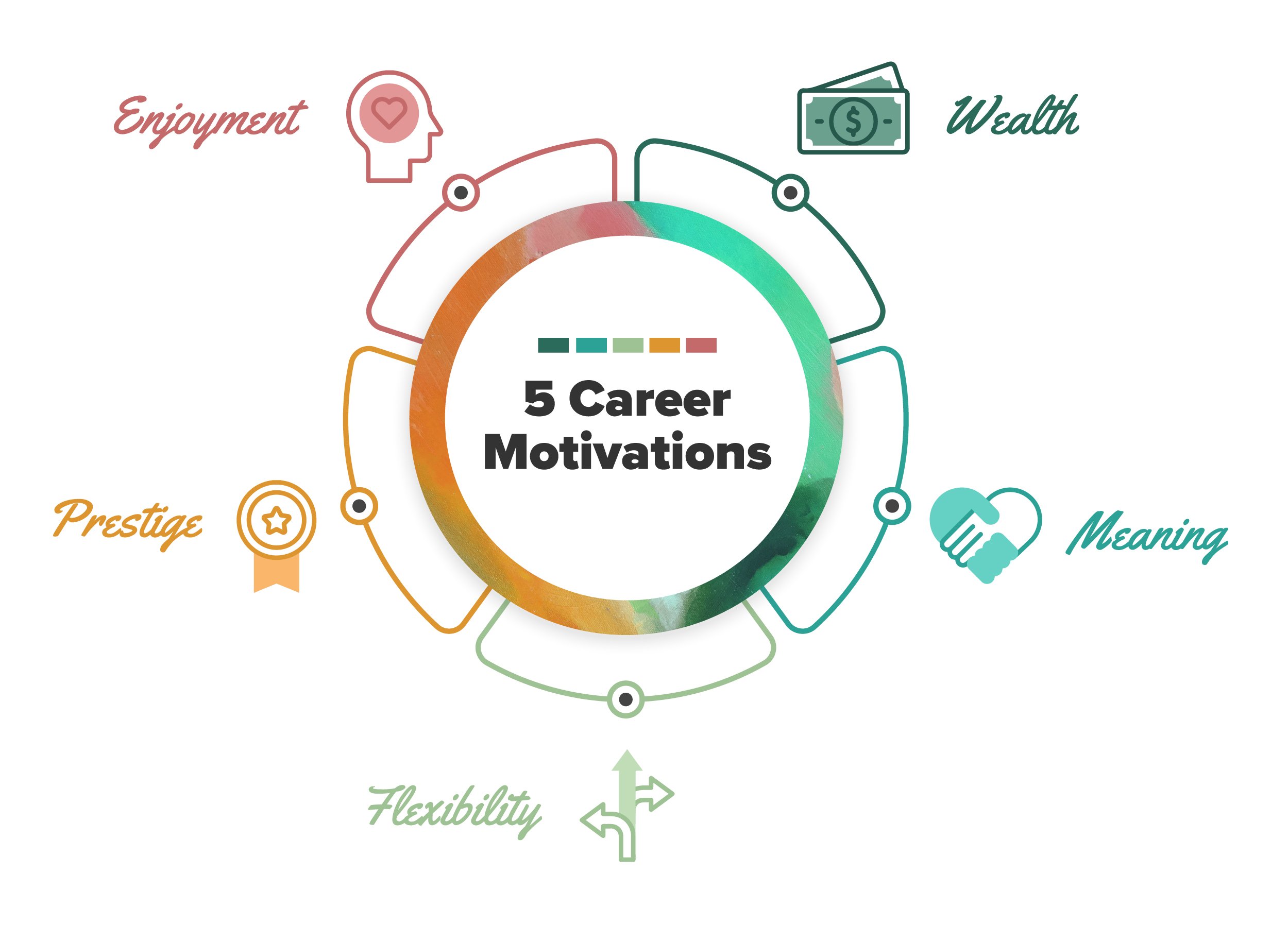
Let’s break down the five primary career motivations. Identifying which is your strongest motivation can help you make better decisions and ultimately lead to greater job satisfaction. 

  1. Flexibility. If your primary career motivation is flexibility, you have a priority that requires your work to fit around other aspects of your life. Perhaps that means you need a flexible schedule or it may mean you require the ability to work remotely. Setting your own hours, working split shifts, or working part-time are all highly valuable to you. In fact, you would choose a flexible arrangement over higher pay or more power. Work is important to you, but you have other priorities and want a job that is malleable. 

  2. Wealth. Financial security, income, and benefits matter most to those motivated by wealth. Enjoying your day-to-day work is nice, but being well-compensated matters more. You want a job that gives you a sense of security and may even have the potential to change the financial trajectory of your family. You view a paycheck as an opportunity to both feel secure and leave a financial legacy. You can pay your mortgage, save, and you do not have to worry about finances. 

  3. Enjoyment. Your nightmare is constantly watching the clock at work because the day moves so slowly. You are most motivated by the idea of liking the work you do every day, even if it means you voluntarily opt out of a promotion, like Maverick. Whether it’s creative, data-centric, or people-focused, you are energized by your work and often get into a state of “flow.” Titles, money, and flexibility might be nice added perks, but when it comes to big decisions at work, you will not stay in a job that you simply do not enjoy. 

  4. Meaning. If your top motivation is meaning, you make career decisions based on the difference you believe your work is making in the world. You are motivated by altruism and thus you may take risks as a result, earn less, or overextend yourself, but you feel great alignment in your work and your life’s purpose. Your work is more than just a career, it is a cause you believe in deeply. 

  5. Prestige. Do you feel a burst of pride when you get to share with someone what you do or where you work? If you are most motivated by prestige, your work might not feel “worth it” if no one knew the name of your organization or the field you work in. Your work may include long hours or lower pay than you prefer, but your role is significant and your organization is special. There is a certain gravitas associated with your employer or profession that is satisfying. 

When embarking on a career path, job seekers are often drawn to what would logically appear in a job description: the tasks, skills, and projects that encompass what the day-to-day looks like. But your satisfaction at work depends largely on what motivates you outside of a job description. Knowing your career motivation can give you clarity at those junctures in life when you have an opportunity to make a change, just like Maverick avoided promotions because he knew deep down he just had to fly. 

4 Strategic Ways to Maximize Attending a Conference for Professional Development

I recently had an excellent weekend that consisted of pizza, an 80s themed birthday party, and a writer's conference.

Now, you need to know: I love a conference.

I love a live, in-person event whether it’s Broadway, church, or a marathon. In fact, I wrote my master’s thesis on maximizing the opportunity of handheld devices at live events (back then it was pretty iPhone focused, so in a way, I guess not much has changed in 11 years.)

At the conference, I was reminded of four ways to squeeze the most juice out of live, in-person events as possible. There really is a way to do it wrong, so here are my top four tips on how to make the most of the opportunity.

1. Be prepared.

Research the top three people you want to meet, then schedule time with them or go locate them. Research ahead of time so you can recognize them and know where to find them.

Conferences and live events are useful for professional development, but so much more. They’re for strategic relationship building.

2. But be open to serendipity.

I spent 20 minutes chatting with a random woman I plopped down next to for the lunch keynote.

We were polishing off dessert before we discovered our mutual love of the The John F. Kennedy Center for the Performing Arts; she’s on the board of the Washington National Opera. And if you know me well, you know there’s no place I love in DC more than the Kennedy Center.

On top of that, my new friend lives about ten minutes down the road from me. I didn’t expect to find those commonalities at a writers conference in Rockville, Maryland!

3. Don’t feel obligated to sit in sessions all day because you paid for them.

Go to the ones that you expect to glean value from. Warming a seat while checking your email is not the best use of your time. Instead, maximize it by focusing on your strategic goals and plan your time accordingly.

And this last one hit me the most...

4. Use the shakeup in your normal routine to connect dots and look at your work and life with fresh eyes.

I last attended this same conference six years ago. Back then I was emerging from my first trimester of my first pregnancy and I remember noticing that I could actually bear the smell of coffee for the first time in 11 weeks. Being back in the same space took me right back to that sensory experience. Back then, I also met with some agents who told me "I like you and you’ll sell a book but maybe not now."

6 years later, walking the same halls, I couldn't help but think about what's changed. I returned with more confidence and clarity. I’ve put work in, gotten published in places like The Washington Post and HuffPost, built a business, and had two kids.

And it was a weird thing, thinking about how more than half a decade has gone by.

I was just telling my therapist I’m not used to not being ‘young’ any more.

On my birthday a friend told me I was in my prime. The child-rearing, business-building, weight-lifting, goal-realizing prime years.

What a fantastic reframe. It’s one I needed.

And being at the writers conference reminded me of that too.

The passage of time, the lessons learned, the experiences added, the maturity built—all of that is a precious gift. It’s a precious gift to be here now. One I won’t take for granted.

So go to the conference, the marathon, the theatre, or church. Soak up the here and now, the clamoring with throngs. It’s a precious gift. Do it strategically and maximize the most of the opportunity.

Master Your Month: the Ultimate Monthly Shutdown Guide

At the end of every month/beginning of the next I do a monthly Shutdown Routine. Don't worry, it's not like a government shutdown ;-), it is putting a nice bow on last month's work and life and moving into the new month with intention and organization. Here's the routine: 

  1. Make a list of last month’s highlights

  2. List and organize all business expenses from last month

  3. Finalize next month’s budget based on the income from last month 

  4. Menu plan the next month’s family dinners

  5. Finalize monthly goals for next month

First I reflect and make a list (I ♥️ a list–you too??) of all the high points of the previous month. This helps me realize how awesome even January was! Instead of letting my feelings lead me, I let the list lead me. It reminds me of all the goodness I experienced from watching a movie I enjoyed (Licorice Pizza!) to helping to host two baby showers. It will help me remember months from now what was great about January (the least popular month of the year.) 

Then I do some business housekeeping. One of the worst parts about being an entrepreneur is all the money stuff, but I’ve learned that I can be way more on top of itemizing deductions for tax season if I keep track of it every month. So at the end of every month I review credit card statements and make a list (and a pretty little spreadsheet if I do say so myself) of all my business expenses. This makes it all so much easier in the long run. 

Then I finalize next month’s budget. It doesn’t change a ton from month to month, but I do have a fluctuating income due to the nature of my work, so I make sure we have a zero-based budget based on what we earned the previous month. Every dollar gets a home on the spreadsheet for the next month. I do keep budgeting simpler than some folks because I put most expenses on a credit card (that I fully pay off every month!) so we get the passive income of the credit card points that accrue. I never pay for rental cars (and often don’t pay for hotels either) because of these credit card points. I recommend the Chase Sapphire credit card. It has the best perks IMO and is currently offering up to 60,000 bonus points for new customers. That translates to $750 free money when you use it toward travel when redeemed through Chase Ultimate Rewards. Here is my referral link.

And yes, I menu plan all our dinners (and I’m beginning to do lunches too!) before the month even begins. I don’t know if you hate menu planning like I do, but it feels like such a brain power suck when I try to figure it out on a weekly basis. Instead I figure out the main course for all the meals in one fell swoop and then flesh out the details when I'm at the grocery store the week of (if broccoli is in season and I think it pairs well with our meat, then broccoli it is.) 

And lastly, I don’t do quarterly goals or annual goals, I do monthly goals based on my big values and priorities for the year. This also gives me the flexibility I need to pivot! The reason monthly goals work well for me is because a month is such a short amount of time, I have to connect my ambitions with my actual schedule. For example, this month I want to read more. So instead of just having an annual goal of reading 50 books, I went in to my calendar yesterday and literally scheduled reading time from 8-9:30pm 3 nights next week. This is where the rubber meets the road in connecting aspirations to reality. 

If you want more tips like these to optimize your work/family/life, I want to invite you to consider joining the Hustle & Grace group coaching program. Doors open soon.

Snag your spot on the waitlist to be the first to hear about early bird pricing and get all the details right here

Reclaim your Focus: Set your Credit Monitoring to “Cruise Control.”

Thank you to our generous sponsor Dun & Bradstreet for supporting the Hustle & Grace Podcast and HilarySutton.com.

To Focus on Growth, Automate Specific Business Credit Monitoring Tasks

Maintaining good financial health is essential for a growing company. But when you are focused on other demands, it’s easy to let business credit monitoring slip.

We can help you track changes to your business credit scores and ratings and alert you to which ones could potentially impact your company.

Whether you’re getting started or positioning your business to take advantage of the next big opportunity, let us help you check credit monitoring off your list. Sign up for real-time, easy to understand business credit alerts and get the insights you need to help you reach your business goals.

3 Lessons from Jumping Into Jeremy Cowart's Creative Process

If you got to step inside the creative process of one of the most talented creatives alive today would you?

If even for a minute?

  • Play a round with John Mayer?

  • Do a cold read with Kate Winslet?

  • Hop in front of Jeremy Cowart’s lens?

That’s what I did this week.

Woman with red hair, Hilary Sutton, smiling and looking to the right of the camera

Jeremy Cowart, prolific artist and photographer who has photographed everyone from Gwyneth Paltrow to Spike Lee, opened up his studio to normies like me for 90-second sessions.

After admiring his work for over a decade and interviewing him on the Hustle & Grace podcast, I knew if I had the chance to be photographed by him I would do it.

So in a whirlwind of an afternoon I swooped into his studio, stepped in front of his camera, and was done within minutes. 

Takeaways:

  1. There are very few moments in life where it pays off to focus on your insecurities. I had one minute to relax and be a good subject for Jeremy. Thinking too much about myself wasn’t helpful.
     

  2. Do things out of your comfort zone from time to time. I did this shoot with Jeremy to kick off a creative business retreat. Doing something radically different from my typical Friday afternoon was a great way to shake my brain awake and look at things from a fresh perspective.
     

  3. Art, business, and new experiences are all better with friends. This photo shoot and 48-hour adventure were enriched because I did them along with my oldest friend Bonnie. Life is richer in community. Period.

Want creative and career encouragement like this in your inbox once or twice a month? Sign up for my email newsletter here and I’ll send you my mini ebook (featuring Jeremy, among others!) 12 Little Hacks for the Mindful Creative.

Introducing the Career Motivation Framework

My passion for studying careers really started when I was fresh out of college and was working in retail (along with some other side hustles) and I was just so bored.

I remember writing lists on the back of receipt tape just to pass the time. I knew that I couldn’t do that forever. I dreamed about work that was flexible, autonomous, creative, involved collaboration…I knew what I valued, I just didn’t know what was possible.

Everyone is motivated to go to work for different reasons. When a job no longer fits your primary motivation, people either “quiet quit,” mentally checking out or they quit altogether. 

We all make choices in our careers because we are motivated by one of these five categories. 

Knowing which motivates you most can help you make strategic decisions in your work moving forward and ultimately lead to a more satisfying career path.

Flexibility

Whether it’s just for a season or it’s forever, you know you want a job that can work around your life. You would rather make your own schedule than have an impressive title or more money. Work is important but you have other priorities and want a job that is malleable. 


Wealth

Financial security, income, and benefits matter most to you. You want a job that makes you feel secure and maybe even change the trajectory of the next generation in your family. You can pay your mortgage, save, and you don’t have to worry about finances. 

Enjoyment

What matters most to you is that you spend time doing the work you enjoy. Whether it’s creative, data-centric, or people-focused, you love it. Titles, money, and flexibility might be nice added perks but at the end of the day your main thing is that you enjoy what you do.


Meaning

You are most passionate about the difference you are making in the world. You may be taking risks as a result, earning less, or overextending yourself, but you feel great alignment in your work and the difference it is making in the world. This is a cause you believe in. It may even be the thing you care about most in the world. 


Prestige

Do you feel a burst of pride when you get to share with someone what you do or where you work? Work may include long hours or lower pay than you want but your role is significant and your organization is special. 

Discover your career motivation by taking the quiz here. Along with your results you will get personalized tips based on your specific motivation so you can lean into what motivates you most and continue on a path toward creating a career and life you love. 


2022 Mid-Year Goals Check-In

Woman journaling in a notebook with glasses and coffee cup.

July. The January of the second half of the year. 

No? Not how you think of it?

Those fresh calendar dates really are arbitrary. And yet, if this approach works for you, it can be helpful to use them to pause, look back, and assess if you are pleased with the choices you’ve made and the things that have happened in your life. 

July works as a perfect mid-way check-in point to look back on the first half of the year, review goals, plan, and strategize for the second half of the year. In January I usually choose a word for the year and I make it a habit of thinking through what I want the following year to look like. But in the case of the “word for the year” well, I rarely give it a lot of thought beyond the first month. It’s just kind of a fun new year ritual. However, a mid-way check-in can be helpful in not letting our big dreams and ambitions from January fizzle as time passes.

I thought today I’d walk through my own mid-way check-in and include you in the process. Let’s see how it’s gone down.

First: Review

In looking back at my own goals I plotted out for 2022 and what the first half of the year held, I notice a marked difference between the first quarter and the second quarter of the year. 

Maybe it’s because my baby turned one, maybe it’s because we didn’t have a new COVID variant, maybe it’s because we were emerging from winter, whatever the case, I had a whole lot of fun in Q2. I’d argue that I had more fun happening in my life between April and June of this year than I’ve had since 2019. Maybe not a high bar but one I crossed nevertheless. 

I also noticed that the pace of my life as well as the productivity really picked up! I began to think bigger picture and longer term as I made my first hire for HSL Digital. Rachel Day Hughes, my associate, is helping me take on more clients as well as helping me give Hustle & Grace the attention it deserves. 

I also think that Q2 felt more energetic because I got the childcare help I desperately needed back in January. I really saw the payoff of that rhythm by March and especially in April and beyond.

If you are wondering if you should hire the help you need, this is the sign you’ve been looking for.

HIRE THE HELP YOU NEED! 

How It’s Going

I made a 22 for 2022 list of mostly low bar stuff that I really did want to do in 2022. I sort of viewed it more as a “fun” list than a “goals list.” (Need for fun strikes again.) So far I have 11 checked off and I’m on pace to do ok with the rest if I prioritize them. Context: when I made this list I was feeling extremely depleted. That’s why several items in this list are self-care oriented or one-and-done, aka attainable. My margin was nonexistent. But I also knew I’d be more likely to actually do things like “schedule coffee with a friend” if I put it on a list. Thus here is my 22 for 2022: 

  1. Monthly date night (missed January but we’ve kind of made up for it! I counted 7 completed on my calendar by end of June.) 

  2. Read the New Testament 

  3. Have a coffee date with a friend ✔️

  4. Get a massage

  5. Get a manicure

  6. Get a pedicure ✔️

  7. Record a podcast season (or mini season) (It has begun! I’ve recorded a few episodes and it is launching August 16!!)

  8. Increase annual revenue by 20% (On track!)

  9. Finish draft of manuscript (Haven’t touched it yet this year)

  10. See a Broadway show ✔️

  11. Get the girls vaccinated (One shot down, one to go!)

  12. Go to NYC ✔️

  13. Get a nanny ✔️

  14. Join a gym ✔️

  15. Read a parenting book (started Hunt, Gather, Parent but haven’t finished) 

  16. Read a personal development book ✔️ (The 12 Week Year was great.) 

  17. Speak at a conference ✔️(Spoke at Momentum in June and will be at the Digital Summit in DC in August!) 

  18. Get an article published in a high profile publication (Have only done one reach out so far. No dice, but also, not enough effort made yet.) 

  19. Celebrate R’s 1st birthday ✔️

  20. Go on a 10th anniversary trip (this is on the radar for October, but nothing is booked)

  21. Take a H1 (first half of the year) social media break + a H2 (second half of the year) social media break (didn’t exactly remember to schedule this for the first half of the year but am enjoying a break from social this month! Testing out the 80/20 rule.) 

  22. Read a business book ✔️ (The Long Game by Dorie Clark and Principles by Ray Dalio are both excellent.)

  23. Take 6 weeks off work (So far I’ve taken 2.5 weeks off so I need to press the gas on this the second half of the year. I think I can do it.) 

Oops I see now that it’s 23 for 2022 instead of 22. OH WELL! 

As you can see these are things I wanted to prioritize but don’t all necessarily qualify as serious “goals.” I wanted to make a lot of these attainable and easy-ish while also having some good payoff. Everything on the list aligns with my values. There are also some stretch goals in here: relaunch the podcast, finish the book draft, have my highest grossing revenue year yet, etc. That’s plenty right there.

Mid-Year Check-In Assessment

So far, 2022 has been heading in a great direction. More opportunities have come my way than I anticipated. I’m building out the systems, processes, and team needed to grow. I’m more energized and validated in my work than ever before and I’m really beginning to see that anything is possible. On the home front, being a mom is relentless. I still don’t feel like I’ve got “me” time outside of work (which lol work is not ‘me’ time! That’s like saying a shower or brushing your teeth is ‘me’ time!) I’m reminded that the only way to have fun or margin or anything means not only do you have to be proactive, you have to plan. Planning is an essential part of being a parent and having any sort of life outside of parenting. 

I am looking forward to the second half of the year. My parents are moving down the road from us. I love my clients. The new season of the podcast is launching in August. We will be celebrating our 10th anniversary. And many other things that I don’t even know are coming down the pike (ie in January I didn’t know that work would take me to Naples, Orlando, or Nashville in the first half of the year. I also didn’t know it would take me to see Freestyle Love Supreme or John Williams!). I’m feeling more optimistic and energetic than I have in quite some time. Grateful, grateful, grateful for this life. 

Now about those big goals from the 22(3) for 2022 list that are looming…if I really am going to get this book published I have to carve out time to work on the manuscript. If I want a byline in a national publication, I’m going to have to pitch. If I’m going to read the entire New Testament, well, I need to make it a part of my daily routine.

What gets scheduled gets done. What I know for sure is that what doesn’t get scheduled most certainly does not get done.

How bout you? Are you heading down the track you were hoping to at the beginning of the year? Are you starting to feel more energetic about life as the pandemic seemingly becomes less of a big part of our everyday lives? Are you also a really tired mom??

I’d love to hear how it’s all shaking out for you and any tips you have to make sure the second half of the year lines up with your values and goals. Cheering you on always!

Being a Working Mom, Maternal Instincts and Mom Guilt

Let’s be honest. I was always a feeler. 

But motherhood has taken it up a few notches. What I care about more than anything is tiny and vulnerable and walking around outside of my body. I love these little people. I mean LOVE. 

I am a youngest child, so “protective” and “maternal” and “scared” were not really in my vocabulary until becoming a parent. 

I was told it would all change and change it did. I remember one of the first times I had a weird maternal anxiety moment. I was pregnant and walking on a subway platform. I had this vision of a stranger coming up and punching me in the stomach. My mom said that anxiety was just maternal instincts kicking in. Protect baby at all costs. See the danger before it surprises you. 

P r o t e c t . 

Even now when taking my girls out in the stroller I have visions of a dog getting loose and trying to attack them. I have visions of medium-sized dogs flying through the air as I fearlessly kick them like a field goal. I used to be scared of dogs. 

Maternal instincts. They come. 

The mama bear thing is REAL.

And so is mom guilt. 

Wow. Whyyyyy can’t I just enjoy the fact that I work and I also get to spend lots of time with my kids? Whichever role I’m in at any given time I feel like I should be giving more time to the other. 

I am generally a sensible person. A feeler, but sensible. So why can’t I grab this mom guilt by the horns and make sense of it? 

Can I blame Covid for this? Or Obama? Kim Kardashian? 

I just want to be a happy working mom living the dream of doing work I love, making good money, and spending lots of time with my kids.

So why can’t I settle down and just appreciate all of it without worry or guilt? 

Maybe I'll get a grip after I wean.

Or maybe I really can blame this on Covid.

Planning Hack: Just Say "No" to Floating To Do Lists

May 2020: photographic proof of my almost sporty renaissance

This month marks two years since society was forced into a widespread lockdown. I usually love to look back on photos of my daughter “on this day” from past years, but I feel surprisingly troubled looking at the innocence on all of our faces from photos during this time two years ago.

Some of that season sort of felt novel. Do you remember that? All of a sudden we were thrust into a life where our social circle became immediate family. Schedules became simple. Every activity was at home.

No restaurants. No outings.

The outdoors were our sanctuary.

And for those of us who could, working from home became the norm.

We baked bread. We attended virtual concerts. I got hyped about MasterClass (still recommend Bob Iger and Chris Voss' classes!) and thought I might start playing softball more. (🤣) It was all very scary but it was also kind of quaint and refreshing. Weird.

I’m glad I didn’t know two years ago what all we would be in for and just how long COVID would be a big part of our lives. One big thing that I see when I look back on these last two years is how much we adapt when we’re forced to. We are a resilient people.

If necessity is the mother of invention, then needing to work from home with one—and then two—little kids sure pushed me to optimize my productivity and time management skills.

Here’s one planning hack that made a huge difference for me in business and in life.

Just say “no” to floating to do lists.

Sometimes you need to jot down ideas, but a "To Do" List that has no deadlines or schedule, is just a list of thoughts. Resist the urge to just make a list without following through and figuring out when you need to finish something and where on your calendar you’re actually going to put it.

Caveat: deadlines can change. Life happens. Sometimes more important or urgent things come up and you have to shift things around. But at least begin with a specific deadline. It's better to aim at something and then make adjustments if needed.

Deadlines serve as a form of accountability. Use them to your advantage to make sure a list of things you want or need to do "at some point" actually get done.

4 Strategies Every Professional Should Steal from Content Marketers to Establish Expertise and Earn More

You have a personal brand. You have a platform. You have the opportunity to lead others. You have the opportunity to shape your own career opportunities by strategically creating content. Wait, what? That last one? That’s not just for marketers?

HilWing-09322.jpg

Definitely not.

Whether you’re a marketer or not, you can use strategies that content marketers use on the daily to set yourself apart from competition, establish yourself as an authority in your field, and subtly remind your network that not only is this what you do for a living, it’s a passion, and anyone would be lucky to get work with you. And what are the benefits of being seen as an expert in your field?

You can:

  • be more selective with clients and projects

  • charge more

  • increase your potential to impact people in new ways (think speaking, writing, being asked to contribute to special projects and opportunities)

A huge way you can set yourself apart as an expert in your field is to implement content marketing strategies. Here are four strategies you should be stealing from content marketers right now.

Strategies Every Professional Should Steal from Content Marketers

  1. Riff on something that is happening in the news cycle. Jump into the conversations people are already having and offer insight. Imagine you are in advertising and it’s the day after the Super Bowl. What do you do? You should share your take on the best and worst Super Bowl ads. This is a way to flex your expertise, contribute to the conversation, and provide something interesting and informative to others that subtly reminds them that you are an expert on this topic. 

  2. Create a piece of content that is clearly educational. This may be an op-ed you contribute to a publication, a three-photo carousel of tips on Instagram, a blog post, a quick how-to video, or even an infographic you put together using a tool like Canva. Epidemiologist Jessica Malaty Rivera is nailing this on Instagram right now. Strengthen your brand as a subject matter expert by creating content that serves your audience and helps them better understand something that you already have expertise in. Try to make it actionable and easy to digest. 

  3. Be a content curator. Share content that you found helpful and informative. You can curate content for your specific audience and pull from other authorities. Author Daniel Pink does this really well on Twitter. He shares a link to an informative article and then includes a few sentences synthesizing the most important takeaways. 

  4. Be a connector. Introduce your network to other authoritative voices that may be helpful to them. You could do this through producing an interview-style podcast or hosting Q&A sessions in a private group on Facebook or an Instagram Live. (I’ve gotten to do this a lot myself as a guest on other podcasts and on my own podcast Hustle & Grace!) There are lots of ways you can connect your audience to voices they may have not previously known. All the while, you are continuing to build your platform, serve your audience, and connect with influential people.

Content marketers have sworn by these strategies for years. Publishing content, speaking into conversations of the moment, and being a community builder are all ways that every professional can engage with their networks, serve them, and grow their careers. So go ahead. Steal these content marketing strategies. I’ll be cheering you on as you do. 

Are you ready to up your personal brand and start creating content? Snag the 31-day personal brand challenge to get 31 different ideas to improve your personal brand one day at a time in a handy calendar format.

The Measurement Method I Learned from Cooking That Helps Me Have an Awesome Weekend and Live By My Values

conscious-design-IMMHJRp4dcM-unsplash.jpg

Who taught you to cook? 

I learned from Pinterest.

I somehow made it to my late twenties not knowing how to produce any food other than stovetop mac and cheese, brownies, and, ok, I had one baked chicken recipe in my back pocket (spoiler: not a very good one). If you asked me to make you a meal it would be food out of boxes that came with three-step directions. 

Enter: Pinterest

All of a sudden I could just search for my favorite foods and create this whole list of recipes that came rife with photos of said dishes. And I began to learn that it wasn’t actually all that complicated. I just needed to know what the ingredients on the list were, how to get them, and then how to do whatever it was the instructions said to do in the recipe. And hey, if I didn’t know what it meant to “coarsely chop” or “finely mince” something I could take a quick jaunt over to YouTube and watch a how-to video that would teach me that very thing!

I started by only trying recipes that had “easy” in the title. Soon I learned the difference between roasting, sautéing, boiling, and broiling. The more I cooked, the more fun it was, the more confident I became, and the more creative I got with dishes. 

The big key for my confidence in the early days was measurement. I needed to know exactly how much oil or garlic or cumin to use. I needed tablespoons and measuring cups. I needed data and reassurance. 

Measuring gives me accurate information. It tells me if I’m on track or not. And it’s useful beyond just cooking. In fact, measurements make my world go round. 

I recently fleshed out the six elements of a rejuvenating, well-spent weekend for myself. I have it in my notes app on my phone and I check off the boxes on my list every weekend to see how I’m doing. If I make it to Sunday feeling depleted, there’s no way I’ve checked off all six of these boxes: 

My weekend checklist:

  • Time with the whole family

  • Time worshipping

  • Time to myself

  • Time one-on-one with Eloise

  • Time for my projects 

  • Time with JC 

IMG_2381.jpg

This applies to “normal” weekends where it’s just the three of us at home. I need to connect with my people, connect with God, and connect with myself. That’s pretty much what it comes down to. 

Tracking this data is profoundly helpful. Maybe there will be a time where I graduate past it, just like now I totally eyeball the garlic (and reader, trust me you can never have too much) but for now the measurement and data help me stay on target. By Sunday night I’m rested, rejuvenated, my family cup is full, and I feel at peace knowing I spent the weekend living by my values. This helps me feel ready to dive into the week ahead, whatever it holds.

What measurements do you have in your life that help you feel confident you’re moving in the right direction? 

Do you want to be more intentional with technology this year? Download the free Technology Manifesto Worksheet to help you reflect on the relationship you want to have with technology, get clear on your values, and commit to a better, healthier relationship with technology this year.

How to Maximize Your Resources and Stop Holding Yourself Back: a Guest Post by Damon Brown

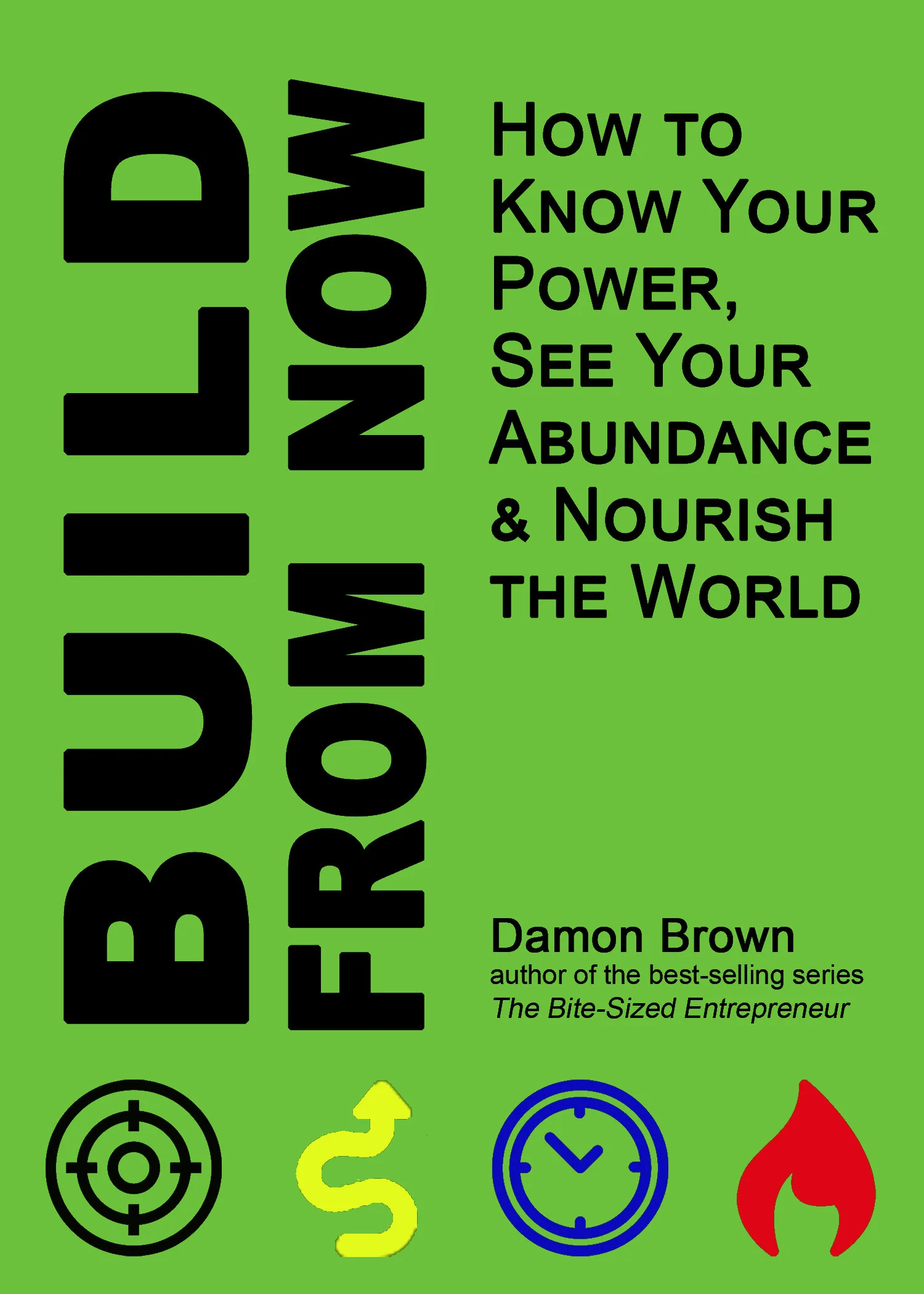
bulid from now FINAL.jpg

How do we make an impact within our post-pandemic world? Damon Brown answers the question in his new book Build From Now: How to Know Your Power, See Your Abundance & Nourish the World (January 28, Bring Your Worth Publishing). 

The follow-up to his best-selling book series The Ultimate Bite-Sized Entrepreneur and Bring Your Worth, serial entrepreneur and business coach Damon Brown breaks down the four resources we all need to succeed: Focus, Agility, Time, and Energy. (You can learn your biggest strength right now for free at BuildFromNowQuiz.com.) 

The challenge, he argues, is two fold: we don’t recognize our biggest resource and the environment itself can overpower us because we don’t see our own power. 

Below is a brief excerpt.

In my research, I’ve found the very ways to maximize your biggest resources also match how you can best compensate for your lowest resources. For instance, if you have an abundance of Time, then you can maximize it by setting clear, definitive boundaries and strong, strategic goal setting. How do you handle things when Time is scarce? Set clear, definitive boundaries and do strong, strategic goal setting. As Wharton professor Adam Grant says, it’s not about time management, but attention management, and we can use that whether we have a bunch of time or not much time to spare. They present different sides of the same coin.

Some books recommend taking the knowledge specific to you and reading that chapter. This isn’t one of those books. In fact, that would be a mistake. Your resources aren’t monolithic. 

We all have the ability to Focus, to be Agile, to maximize Time, and to use Energy. We do until the day we die. So each one of these resources are immediately relevant to you. They all are. Stories, examples, analogies, and contrasts between the different resources are woven throughout. 

My recommendation? Take the quiz online at www.buildfromnowquiz.com,  read the book, then take the quiz again. You’ll be able to get a feel for different resources, which is important because your primary resource today is based on personal and professional circumstances that will likely change tomorrow. Remember, your resources are not fixed. If you take the quiz post-reading, you could be pleasantly surprised, too. 

The veil between you and your subconscious self thins when you have an intense, life-relevant experience. A messy divorce, a painful funeral, or a child’s birth don’t automatically cause reinvention; two people may have the same experience, but one may seem unchanged, while the other utterly transformed. 

Usually, though, the veil is too thick for us to be objective. Through reading this, I want us to slow down enough to see the patterns, feel the pain, and respect our past and present enough to acknowledge our best strengths and limitations. 

Your dominant resource represents what classic business theorist Chris Argyris calls your “Ladder of Inference.” 

We go through five steps when we get new information: 

  • we select the data relevant to us;

  • we paraphrase the data in language we understand;

  • we label the data to describe what we believe is happening;

  • we explain or evaluable what’s happening;

  • and we decide what to do.

Then we do it.

This would be less important if we looked at every experience in a fresh light. But we don’t. We begin to see what we believe and experience things in ways that confirm the world to be. 

This phenomenon plays into our FATEs. It is why we will keep doing all-nighters (Energy as our primary resource) even though we’re way past a point in our life when it makes sense; It may be more efficient and comfortable stretching the deadline (Time as our primary resource), but we’re locked in the habit. 

There are a few things at work here.

First, we have “confirmation bias,” which means we’re more likely to accept data that fits our worldview and, frankly, our ego. We like feeling right more than actually being right. It gives us security. 

Second, the more you think about something, the more likely you’ll see it. For instance, if you worry about your ability to maximize your Time, then you’re more likely to be paralyzed when you have to decide what to do with it – and then end up wasting your Time, confirming your own theory. Theorists call it the Baader-Meinhof phenomenon. 

Third, Argyris’ Ladder of Inference theory is the equivalent of an online “filter bubble,” as your options begin to feel narrower and narrower because the framework is built to give you more of the same. Your mind works like a modern Internet browser, website, or social media platform: you liked this message from McDonalds? Well, let’s show you an ad from Burger King, Wendy’s, and Jack In The Box. You bought this crib? Well, let’s suggest you buy baby bottles, rompers, and a car seat. 

And you like being Agile? Makes you feel at your best? Feeds your ego, too? Well, we’ll keep putting you in situations where you have to adjust at the last minute. Let’s keep you feeling good.

The Ladder of Inference calls it a “reflexive loop” and it can have you leaning on a particular resource out of habit.

As you look into your resources, do not believe one particular strength is the answer. Focus, Agility, Time, and Energy are all necessary for you to make any sort of impact on the world. 

Your resource is the filter to your world. As the saying goes, if you have a hammer, then everything is a nail. But the most dangerous thing is not knowing you’re using a hammer at all.